Serve and Volley

As a tennis fan— watching, sadly not playing–long hours of summer, Sunday mornings are spent struggling to tear myself away from the TV as my Catholic upbringing shouts that I should be doing something that is at least productive if not spiritual. The anxiety rises in my chest, but I stay unmoved.

I can’t help it. I watch the searing focus and amazing agility of the players knowing their commitment, wishing it would rain outside so I would feel less guilty about being inside.  Why don’t I have such focus? Such discipline? I could have been in the studio for hours by now.  Or at least the laundry could be going. Or the plants getting tended. Or a long walk. Or? But I remain captivated.

It may be rebellion against the typically American need for productivity that, for me, does not foster things like thought, poetry or beauty unless it’s in a clean house or a well-weeded garden. Or it may simply be laziness easily couched (pardon the pun) in the myth that watching sports is actually doing something.  I like to think hearing the umpire say “Egalite’” at the French Open is practicing a foreign language. Perhaps that counts.

The thing about tennis that is so compelling  is observing the psychology of an individual who is solving problem after problem in an instant not knowing exactly to what they are going to be reacting. The wheels turn as the player discerns with acute awareness and then fluidly responds.  If a player commits right when the shot goes left the point is dead. Then the face reveals where the player is mentally.  And if they beat themselves up for the wrong move the next shot is most often equally wrong. When they center and breathe and take risks, they show brilliance. There is no one else on whom to depend. They alone are responsible for the outcome and yet they can’t fully plan or construct it.  They have to take each shot as it comes.

IT’S THE SAME THING IN PAINTING!!!!  Focus, awareness, concentration and connection to the mark just as a player connects to the racket and the ball–that is what the process is for me.  And just like in tennis, trying to think ahead too much leads to being in the wrong place at the wrong time shutting down the possibilities. You have to react to the last passage, the last mark that speaks. If I decide too early what my painting should look like the result may be competent, but the mysteries and the magic might never materialize. It is only in taking the risks of not-knowing and staying connected in the moment with a belief in what’s imaginable that the best can be born. Trying too hard to force the result is rarely a winning strategy.

So even in a practice as ubiquitous as figure-work is for an artist, where it seems as if the result should be obvious, paying attention and reacting to what you observe as you truly engage with model and materials rather than planning the end result is what really builds skill.  It creates the unknown, the unexpected and the yet-to-be-learned as any worthy match does.

Posted in Uncategorized | Leave a comment

Self as Subject

After looking at self-portraits in class and online, mentally list words might that be used to describe the people in the portraits (beside creepy and scary–there seems to be a lot of that)  –Saatchi online portraits- http://www.saatchionline.com/buy-art?query=abstract+portraits —   Can the visual and the verbal be interchangeable?

If I painted myself as I feel everyday about 2:00PM—the colors that come to mind would be cool and grayed. I might imagine shadows as I head for a nap on the library couch. The line would be somber and sleepy, not too bold and with little energy. A bright yellow painting with jagged, directional lines would be an unlikely result.

Other elements to notice include repeat patterns.  What do they infer verbally?  When walking my dogs with the intent of getting some real exercise and not letting them stop to sniff every dried leaf in hopes that it is a potato chip—I say: “WALK! WALK! WALK!“ quickly and sharply, staccato.  What repeat pattern might communicate that?

The quality of your marks and paint application also links mood, idea and connection—i.e. Slipping through the day- slippery paint with a wet brush, not a bristle brush for a scumble.  A migraine might be depicted with very soft, gentle lines.  A cold could be “congested”….you get the picture—(without a picture)

Expanding the idea of what a painting is from thinking in pictures to appreciating how color, line, form and marks have a way of communicating just as effectively as imagery  gives you more power over your process. And when using yourself as subject, you always have something with which to work.  It becomes easier to push the bounds of translation as you employ words, mirrors and a variety of painting techniques to capture an essence of what you are about.  And after all, when we’re good, that’s what we paint whether we want to or not.

Posted in Uncategorized | Leave a comment

Wanted: Earnest Duffers

Vincent Van Gogh is responsible for creating almost 900 oil painting and some 1,300 watercolors, sketches and drawings, not including his many small sketch books.

He embarked on his artist’s path around 1880 although his first “major” oil painting, the Potato Eaters. http://commons.wikimedia.org/wiki/File:Vincent_Van_Gogh_-_The_Potato_Eaters.png, wasn’t painted until 1885.  He reportedly drew a lot as a child, (which was a common pastime for women and children), but you couldn’t tell it initially. This first painting, like all his early works, was a rudimentary image in neutrals.  He showed little promise as an artist.

His last painting, Wheat Field with crows, was painted in July of 1890, just before his untimely death. http://www.bbc.co.uk/arts/powerofart/popups/vangogh.shtml

I viewed this painting in Los Angeles at a major retrospective.  There was a throng around all of the paintings, but around this one the crowd formed an impromptu semi-circle. The space in the middle pulsed with the energy of the artist and his viewers. As tears began to well in my eyes, I looked quickly at the other faces, embarrassed that someone might have seen my somewhat puzzling response to the moment.  But I wasn’t alone–the emotion was palpable.

He describes his aim in painting- “In both figure and landscape … I want to get to the point where people say of my work: that man feels deeply, that man feels keenly.” I think he succeeded.

Robert Hughes in an article in The Guardian stated: “And yet the amazing fact – and it has never ceased to be amazing – is that this earnest duffer pupated into one of the great visionaries of western art.”

Despite his passion for his art and the integrity with which he made it, he only sold one painting, Red Vineyard at Arleshttp://0.tqn.com/d/painting/1/0/K/c/2/Van-Gogh-Red-Vineyard.jpg   He found this frustrating and humiliating, but he continued to pursue the only thing he thought was worth doing. He had faith in the endeavor.  He stayed honest and true and painted what he had to regardless of public acceptance.

He painted 39 self-portraits.

Posted in Uncategorized | Leave a comment

You Light Up My Life

I heard a TED Talk by Princeton biologist Bonnie Bassler over the weekend about bacteria.  Oddly enough this made me think of us, ArtHouse 23. There is a type of bacteria called Vibrio Fishceri that make light—they are bioluminescent.  When studying these bacteria, what surprised the scientists was not that they made this light but when.   When the bacteria are alone they made no light, but when they grew enough in numbers all the bacteria turned on light simultaneously.

The question the scientists had was how can the bacteria tell they’re not alone? The answer —they communicate–they talk to each other.  When all the bacteria are participating in making molecules that tell the other bacteria that they are in the neighborhood, all the bacteria turn on light in synchrony— much like we saw this last weekend during our open studio. The place was lit up. You were “bioluminescent”. It seems a perfect metaphor. Creating “molecules” (or artwork) that communicate that we are “here” and together, and then sharing that with others is best described as illuminating.

The arc of the process from blank page, to oddball exercise, to frustration and feedback, reevaluation and resolution, to framing and exhibiting  informs and enlightens.  There is no other way to learn what that teaches.

We’ll be talking about this in class before we connect with brush and paint again. Make some mental notes to share as we debrief in the next couple of weeks.

Thanks to all for working together to make everything run so smoothly and thank you again for the clean-up.  The place looks and feels great–ready for us to “turn it on”  again.

Posted in Uncategorized | 2 Comments

Mission Statement

ArtHouse 23 is a place where an individual can explore their unique expression to whatever degree they desire in a supportive atmosphere using the language of paint. It is about dialogue, reflection, practice and creativity. It’s built on a foundation of passion about the process and its art historical roots.

Like a good composition, each person’s inimitability contributes to the whole to create a dynamic, ever-evolving community which is greater than the sum of its parts.

******

Watching everyone  in these last weeks wrestle with details, displaying issues and eagerness and doubt I’m reminded of how the exhibition part of the process makes way for seeing our endeavor as a “whole” that includes commitment, focus, balance, counterpoint, connection… and abiding pitfalls.  Each time we go through this exercise we take stock in the value of the effort and what it may mean to each person participating.

Always, it points to growth in the individual and growing strength in the community, and, of course, some lovely things to hang on the wall. “Things” that others find, delightful, moving, exciting and affirmative. “Things” that people decide they want to live with. “Things” for which some people are willing to open their wallets.  “Things” for which you can be proud.

Congratulations!

Posted in Uncategorized | 3 Comments

Just Keep Moving On

Stop worrying where you’re going, move on
If you can know where you’re going, you’ve gone
Just keep moving on…

(from Sunday in the Park with George, by Stephen Sondheim)

“No one looks at a flower garden and tears their hair out trying to figure out what it means.”
– Jackson Pollock

Once the work is on the wall, it’s out of your hands and into those of the viewer to see it however they will. It is a completion of the cycle.  A time to let go and let the viewer’s interpretation further inform you, (but not shape your future efforts).

Trust them, but only a little.  They will often see mysteries that you had yet to observe. At the same time, if they don’t approach the work with an open mind and patience, they may see nothing.  They may look for what they already know and not finding it in your work, they move on. “One may have a blazing hearth in one’s soul and yet no one ever comes to sit by it. Passersby see only a wisp of smoke rising from the chimney and continue on their way.” Vincent Van Gogh. Do not let this discourage.  As Van Gogh also says: “Painting is a faith, and it imposes the duty to disregard public opinion.”

So where does that leave us in relationship to our audience? We know there are symbols and visual cues that tell viewers how to look at a work of art, but the unaware may be unresponsive.  We know there is an aesthetic that may or may not be shared.  We know that most people who open their wallets when purchasing art are looking for the proverbial “something to go over the couch”.  How do we steel ourselves for either acceptance or rejection? (Acceptance can be just as puzzling as rejection.)

One of my favorite quotes about painting comes from Franz Kline:

“You paint the way you have to in order to give, that’s life itself, and someone will look and say it is the product of knowing, but it has nothing to do with knowing, it has to do with giving… The final test of a painting, theirs, mine, any other, is: does the painter’s emotion come across?” Giving all, giving your best, giving yourself, giving your faith in the process and intention despite your doubt. Being willing to be “wrong” and expose it with all the honesty you can muster–giving indeed.

This may strike a chord or pose a question. Either way, a worthy ponder as we move on…..

Posted in Uncategorized | Leave a comment

Tips for Evaluating Your Paintings

Below is a handy checklist to identify trouble spots in a painting:

Strong foreground—For some reason it is very common that the artist ignores the foreground.  Perhaps because we tend to focus first on the middle of the painting and above, like the horizon.  It doesn’t need to “scream” at the viewer, but it does need to be strong enough to hold up the rest of the painting.  If something just isn’t quite right, check your foreground.

Enough Contrast—This is the number one most common problem I see in the work of novice painters.  People confuse color with contrast and consequently they either have too many high key hues with the same value or so many mid-tones that the piece lacks life. I liken this to public speaking or acting.  Self-consciousness when speaking on stage leads to not enough volume or variation in tone of voice—too difficult to listen to, despite what they have to say, which may be simply marvelous. You don’t want to whisper, nor do you want to shout—does your painting do wither of these exclusively? Don’t be afraid of contrast, it is your friend.

The lights in our studio are ridiculously good. No one in their home will have that light.  It is important to view your work in low light.  I always view my work in all the light that is available—I paint in natural light when I can, then turn my lights on, turn them off again, use just the ceiling light for a while, and then take the piece outside, etc.  Often at the end of the day I sit and watch as the light fades and observe how the piece holds up in the changing light.

Light and shadow—is there a shadow in response to a strong light?  Do you want that?  What about Chiaroscuro (An Italian Renaissance term literally meaning light and dark?)  Would your piece benefit by “charging” the values –making the darks darker and/or the lights lighter?

Integrated marks— Are there marks on your painting that look like you dropped ketchup or mustard from your sandwich?  You can have marks that look spontaneous –PAINTERLY marks are a good thing; they communicate the artist’s hand—but marks “stuck” on the top of a passage without integration can look like you just had a messy lunch.

Four corners—A teacher once said something about checking the four corners of the painting for strength.  I misunderstood and began to double check my work by looking at each quadrant of the painting to see if the composition in that space was strong in and of itself.  I’m not sure how much guidance it provides, but when I am really stuck it seems to help me see the piece more clearly and it often identifies the weak spot.

Use a mirror—Another trick is to look at the piece in a mirror.  Many artists use this, including Angelina.  In my studio the mirror in the hutch is positioned conveniently to see the reversed image of smaller paintings.  I use it often.  In the studio there is a full-length mirror on the bathroom door.

Is the eye led around the painting?  Does it have a focal point?  Where do you want the viewer to begin looking?  A focal point can be a very subtle thing—a small mark with character in a bold color can be enough.  Strong contrast always draws the eye.  Once you identify a focal point, can you see a counter-point—where does the viewer go next?

Is there too much detail or too much strong color scattered all over the painting? If so, it can confuse the viewer.  You can simply “soften” details or too bright colors—lead the eye….

Are there “holes”—areas that have no interest, but are not really resting spots because they are too muddy or indistinct?  This is a tough one.  Sometimes muddy areas can actually be quite exciting when the adjacent color is a complement.  Don’t judge too harshly on this, but check to see if there is an area of the painting that the eye avoids simply because it’s boring.  Resting spots are good; they are a calm spot in contrast areas of strong interest.  Do you have any?

Do edges of the painting “fall off” the sides of the substrate?  This is a common problem with an easy fix.  Is there an edge of the painting where your eye just “slips” off? If so, tone the edge or add a line (tree trunk, side of a wall, etc.), keeping the eye within the format and make every part of the painting worthy of a look.

Is there a sense of space?  Abstract paintings are often flat, but if you are painting more representationally a sense of space is usually an asset.  Remember—warm colors come forward, cool colors recede.  Diffuse light creates a sense of deep space.  (Sfumato, literally meaning “up in smoke”, is a term credited to Leonardo and used to describe passages with no hard edges creating a sense of deep space.  Is this something that would benefit your piece?)

A good composition is considered to be a “harmonious, unified whole” (the gestalt—an organization of,  and the relationship between elements that the brain and eye seek while trying to find harmony and unity), with balance, emphasis ( focal point) and variety, using color, contrast, line, texture, shape, space and pattern.

A good painting is “about something”—you may not be able to verbalize what that is, but you know when you’re looking at it that the artist had a connection to the subject, whether it was something in the imagination or some external image or idea that stirred the soul. Maybe nothing was planned, but nothing was arbitrary.  Again, think of it as a conversation–a call and response.  The best moves on the painting are responsive and maybe even accidental. If they are allowed to be arbitrary, it would be akin babble.  Avoid the babble.

Come to class. Ask yourself these questions about your paintings, ask your compatriots.  Get their honest opinion about how your work “reads”.  They will freely give it.

Posted in Uncategorized | Leave a comment

Awaiting Approval

Art with meaning—what is it, how does it relate to our painting and why do we care?  What does it look like? Can it be created without a skill-set? Does an audience recognize it? And does it matter?

I want to be able to put “it” into simple terms, but they elude.  I look to those who have endeavored to explain.  They write pages and pages in an attempt to clarify or prove something for which there is no clear path or proof. So far I have found only cumbersome explanations with references to myth, religion, philosophy, psychology, native cultures and, of course, art history.

Academicians also seem to be unable to hit the heart of the matter.  Most boil it down to historical evolution and oh-so cerebral explanations of symbols and significances addressed to other academics.  I think it is simpler than that. And there are many others who agree, like Robert Hughes, (creator of the book and television series on Modern Art, Shock of the New, and long-time critic for Time  magazine); Michael (I Love you) Kimmelman, (“the most acute American art critic of his generation,” in the words of the Australian writer Robert Hughes) and James Elkins (E.C. Chadbourne Chair of art history, theory, and criticism at the School of the Art Institute of Chicago), to name a few. But neither they nor I can quite get a handle on it. “It” is elusive.   I usually know it when I see it, but not always when I, or if, I do it. It’s experiential. It has to do with motivation, energy, being present and seeking some truth.

What I know is this this:  There are paintings that say something authentic and meaningful in a universal language. They haunt.  They exhilarate.  They creep around in our memory.  They have been done by geniuses and by novices.  They can be ugly or beautiful.  They can be simple or complex. They can be thickly layered with intricate drawing or thinly dripped or poured or painted primitively. They can be black and white or brightly colored.  They can be big or small, done on the wall of a cave or in a sketchbook. They are not overworked. Questions may remain, but doubt in the doing does not. There is a sense of commitment, immediacy and magic. And one does not need the artist statement to be moved by them.

This is what we strive for.  But there is no formula, no Google Map directions, and no recipe.  It does involve more interest in the process than the outcome. It requires being fully present for at least part of the effort.  It contains a knowing despite the feeling of being completely unsure. It needs a willingness to let go of an idea, a favorite color or stroke, or the most proficient passage of the piece. And in the end, every mark needs to be there and nothing more.  It is about using heart and soul and the unconscious as the dominant guides.  And even though composition and the formal elements determine “readability” it is not about any of those things.  They are merely tools.

I remember when my teacher told me to draw the thing before us.  I carefully rendered what I could discern in the lights and darks and the lines.  When he said “Oh JoAnn” with so much disappointment I knew what I was doing wrong.  I was trying to perform; to please; to reproduce and recreate—not simply connect, react, be present and create.

Is there an endgame? No.  It is a pursuit for the sake of pursuing. These exhibitions mark progress along the way, but even their importance needs to be discarded. To want to be “good” you have to let go of wanting to be “good”. It is simple but not easy. And it is complex but not difficult.  As I write this I feel the thin wire on which these thoughts balance. Afraid of falling, afraid of sounding stupid, but swearing with conviction that these are things about painting and what we do in ArtHouse 23 in which I believe.

Posted in Uncategorized | Leave a comment

Spring Forward

“Time, time, time, see what’s become of me, while I look around at my possibilities…..”

The idea of the “plasticity” of time as Daylight Savings Time hit this weekend began to intrigue me. We have, what has become, an arbitrary custom in our country that other countries (and not even all of our states) practice.  Time, as Einstein so famously theorized, is relative. Yet we are often ruled by it. It is a concept not new in art-making.

Inspired by DST in the monotype workshop, I first “limited time” and then “required time”, by making the exercise about using precise time (among other things)—no more or less than 20 minutes of working the entire time, then requiring an exercise of patience before printing.  This time contraint alone affected the energy, the process and the outcome, all in a positive way.

Artists have explored the concept of time in many ways—think Dali’s dripping clocks, which was entitled The Persistence of Memory   ( http://en.wikipedia.org/wiki/The_Persistence_of_Memory) in which he explored the relativity of space and time.

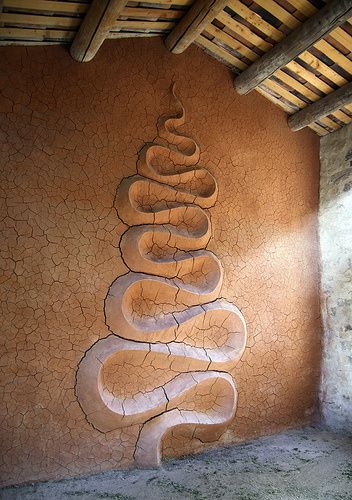
For me the most profound visual explorations of time were done by Andy Goldsworthy, the contemporary British sculptor. He used nature’s processes to beautifully illustrate the effects of time.  One of my favorites is a mud covered wall with a sculptural form built under a depth of wet mud until the surface of the wall is flat over the form.  As the mud dries, over time, it shrinks and the form is revealed. http://a398.idata.over-blog.com/352×500/3/85/55/03/land-art-so/andy-goldsworthy-2.jpg

So in honor of or in response to our time change this week, I propose we work with TIME as a concept. What are the possibilities?

Time of day-Time passing-Time as recorded or measured-Time travel-Season’s change-Age—the patina of time-Freezing of time (Photograph)-Making things takes time either limited or expanded, do either or both-The view from where you start is different than the view from where you finish –reflects time. Etc., etc.

Performance art is time-based that must experience them through the passage of time, as with music. Can that idea be incorporated?

Nature’s processes that reflect time—flowing water; drifting clouds; falling leaves, decaying organics; sprouting life.

It’s almost spring—a great time to ponder time.  Design your own exercise that in some way explores time.  It could be from setting a timer for doing multiples; to “aging” a work with glazes; to rendering biology (plants, people) in various stages of growth; to representing clocks—(deconstructing for “fractured time”). And on, and on…

Use your imagination. Come up with ideas.  Share.

Posted in Uncategorized | 1 Comment

What is a Monotype and Why Would You Want to Make One?

I love this process!  “It’s a printing process where the artist doesn’t have to worry about all of the “technical” aspects of printmaking and can instead concentrate on being creative. Energy, improvisation, gesture, impulse and chance are all characteristics of this printing process. It is the most “painterly” and immediately rewarding technique available for creating works on paper.” History of the Monotype by William Jung

Basically, the process involves applying pigmented ink to a flat, smooth surface called a plate which is typically made out of Plexiglas or some other acrylic sheeting.  Ink can be applied with a roller, called a brayer, and then removed with brush, Q-tips, fingers, rubber spatulas, Color Shapers, etc.  Ink can also be applied with all of those tools, skipping the brayer. Then the plate is placed upside down on a sheet of paper and run through the press to transfer the image. The beauty of the process is that you can do the composing on the plate, wiping it clean or partially so if it’s not shaping up the way you want it too.  It’s a reductive process. It can be repeated for added layering. “Collaged” shapes can be placed on top of the inked plate to block some of the color from being transferred.  They can also be inked in a different color to create a stencil to add to the composition.  Layers of transfers can be made and the “ghost” image left on the plate can also be printed.  At that paint further painting, printing, drawing or collaging can occur.

To me it’s the most freeing form of art making.

Here is a link to a You-Tube video that is almost 10 minutes long and a little boring, but if you want to see a very immediate working style, it’s worth watching (especially if you are taking the workshop): http://www.youtube.com/watch?v=1ZWKwglLcG0   You can fast forward through this to watch this artist at work.  I like his style—very messy. He uses many techniques that are worth seeing.

Here is another link advertising the ink, but show a more controlled, less interesting, application of the technique but with very nice results achieved quickly: http://www.youtube.com/watch?v=ajx3d7PTm68 It’s only 3 minutes long.

If you’re coming to the workshop you will benefit by watching both of these. They will give you ideas of how you might want to approach the process.  Don’t worry about any on the printing techniques, Bill will teach you that part and he will assist.

We’ll try this in class some time again, but it won’t be nearly as effective without a press.

Posted in Uncategorized | Leave a comment