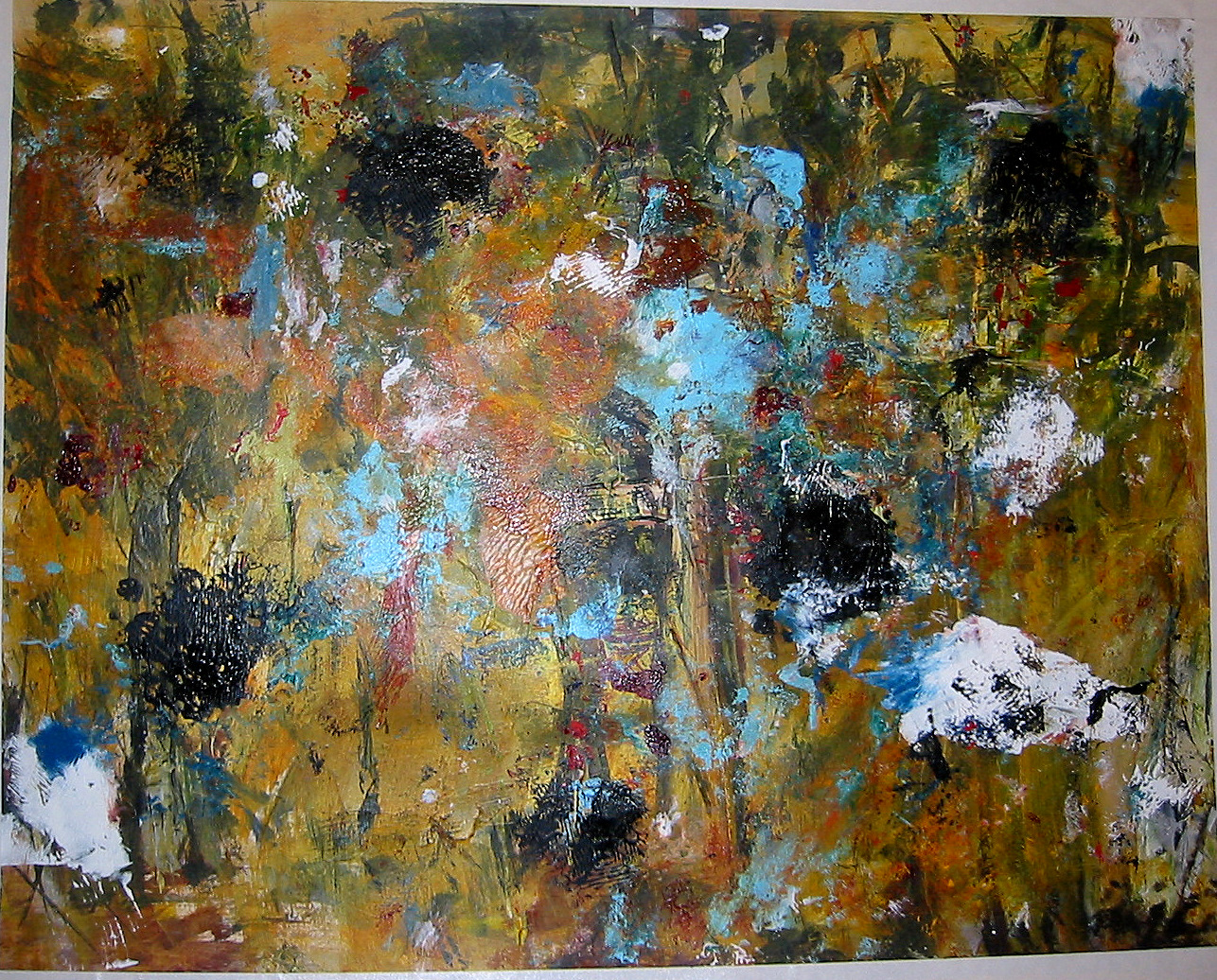
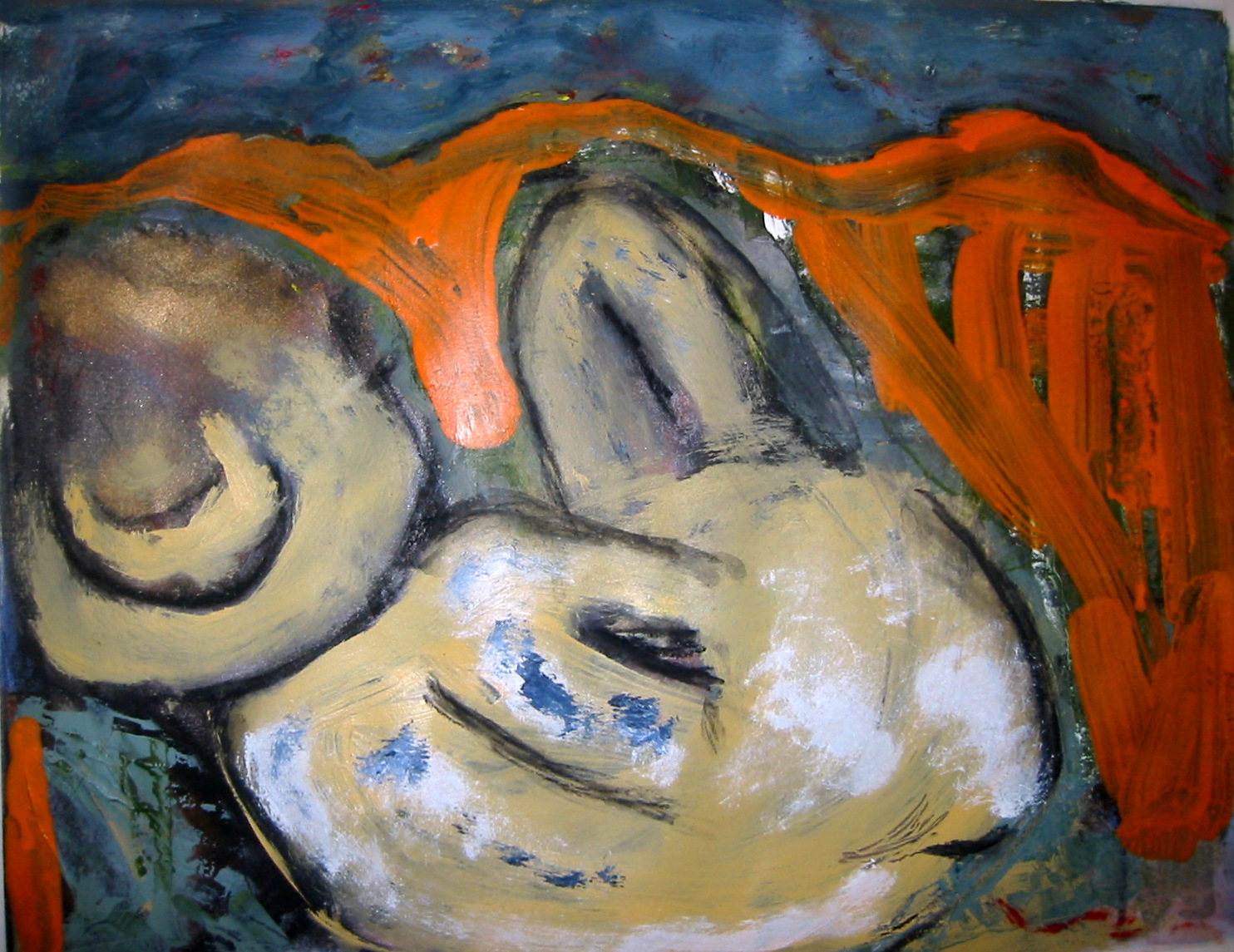
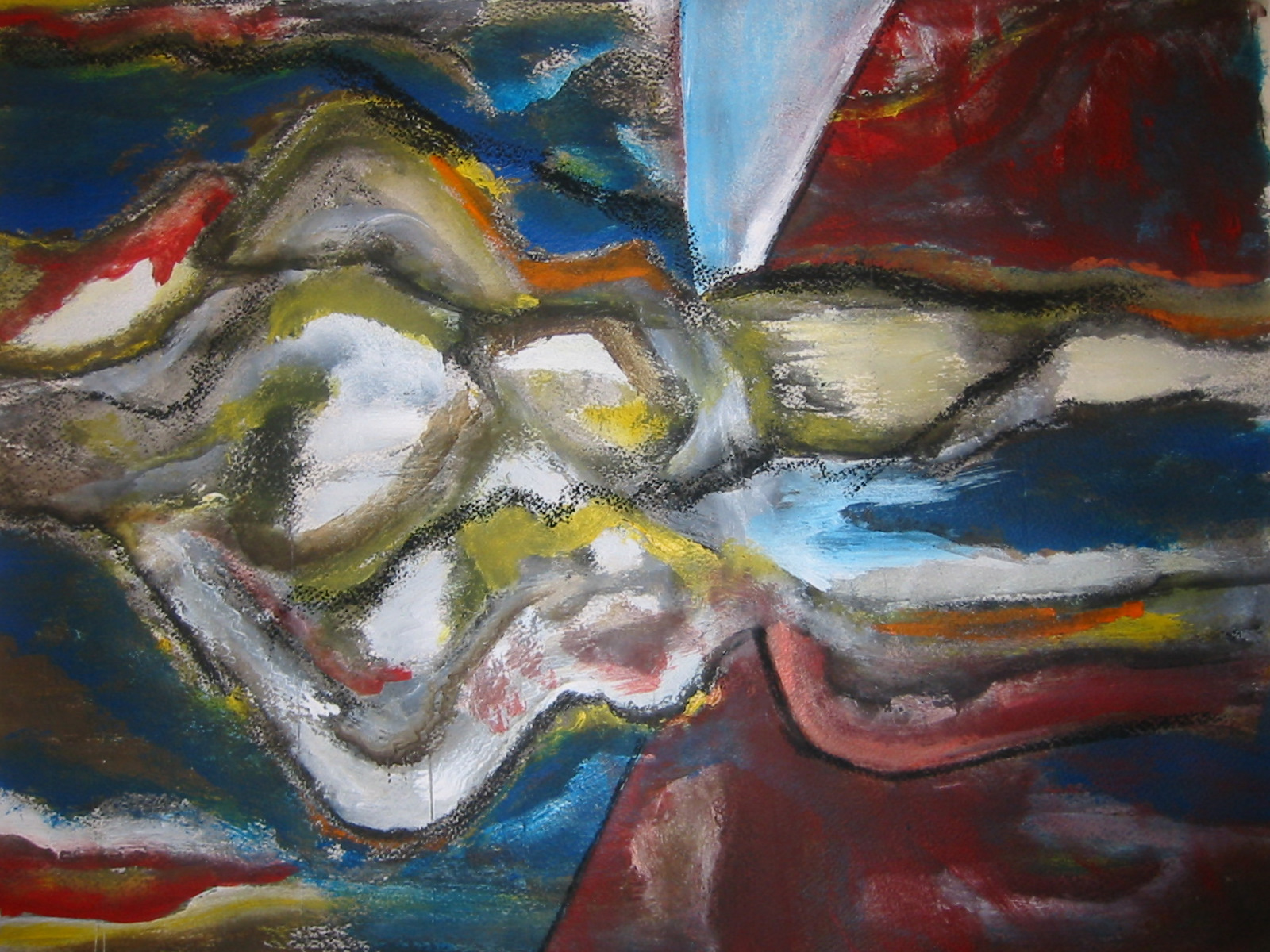
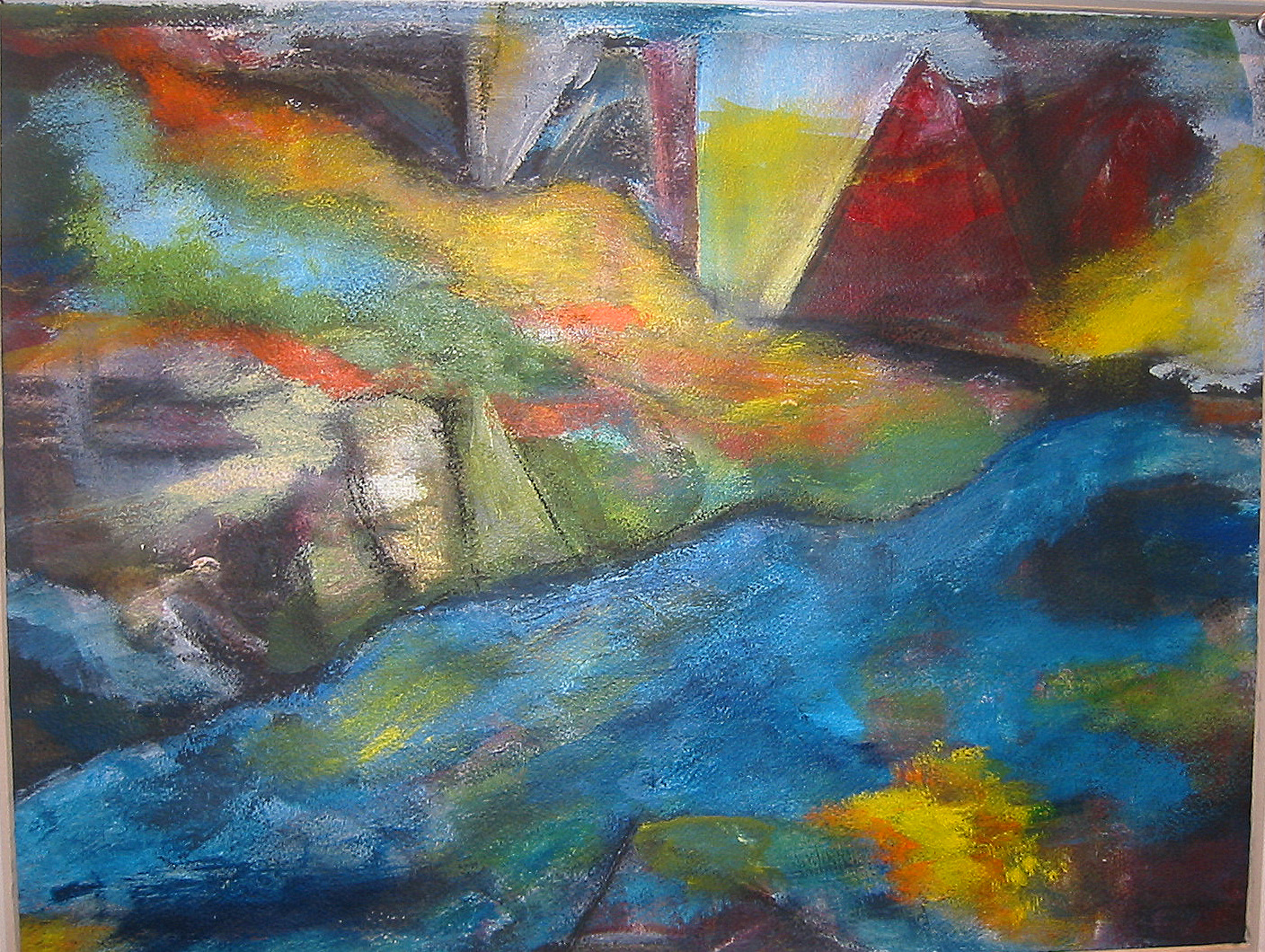
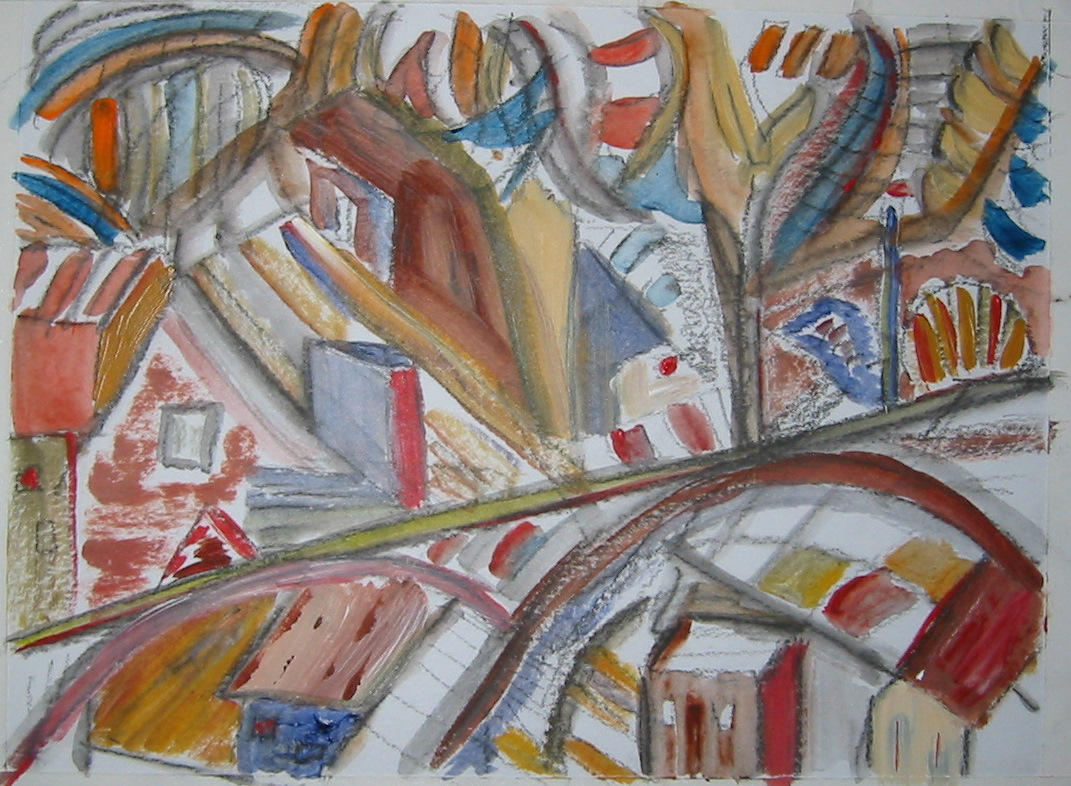
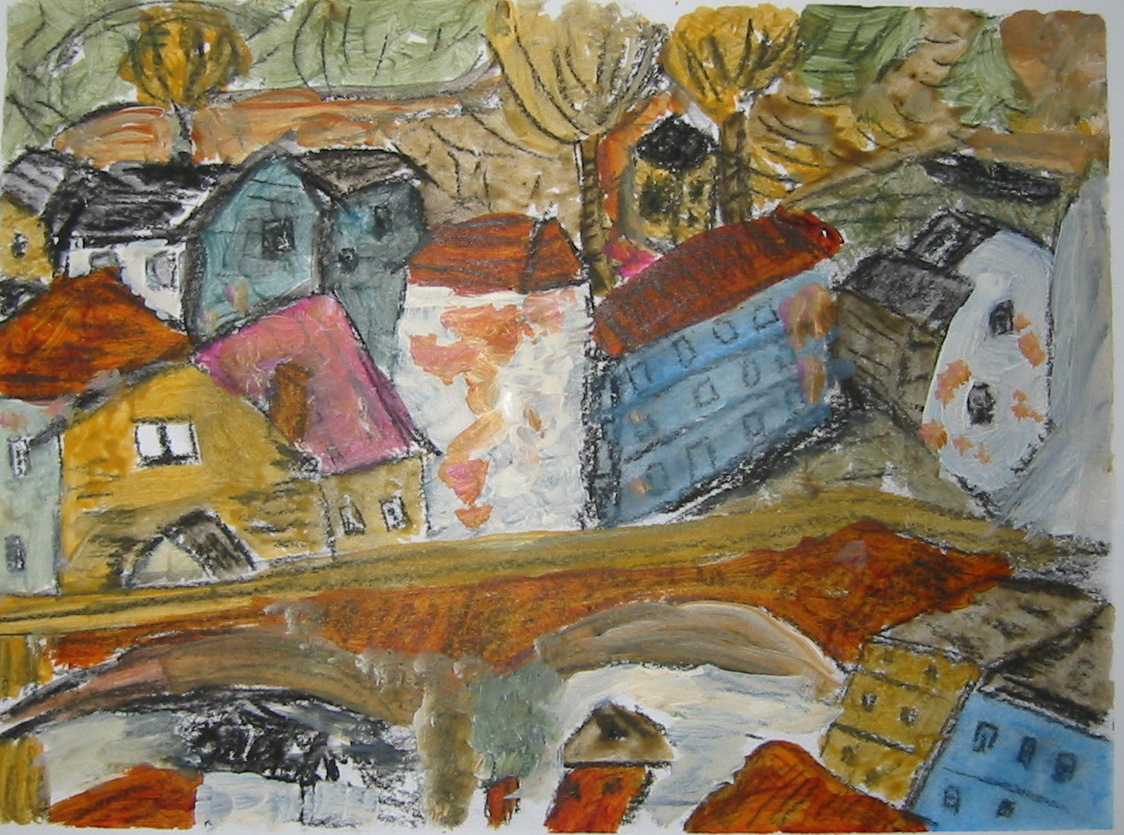
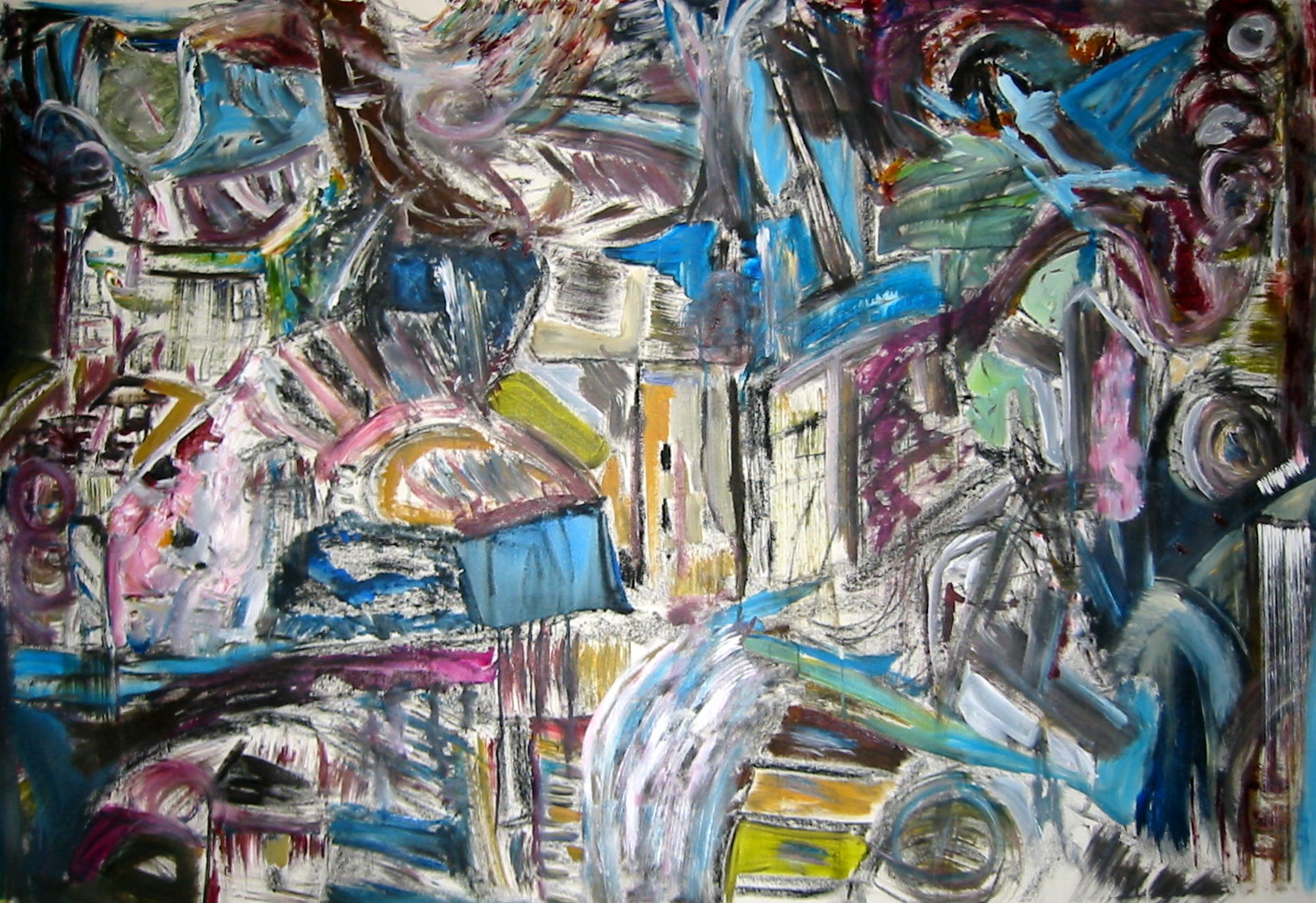
Voiceover continues 8/11/10

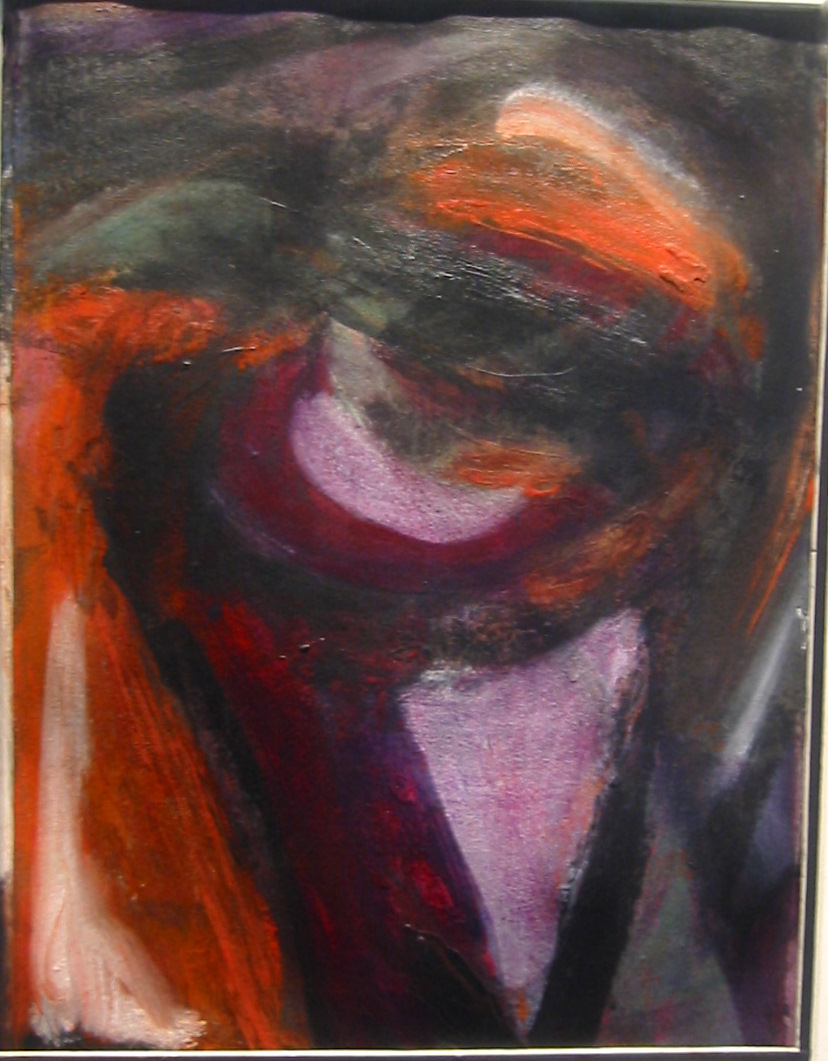
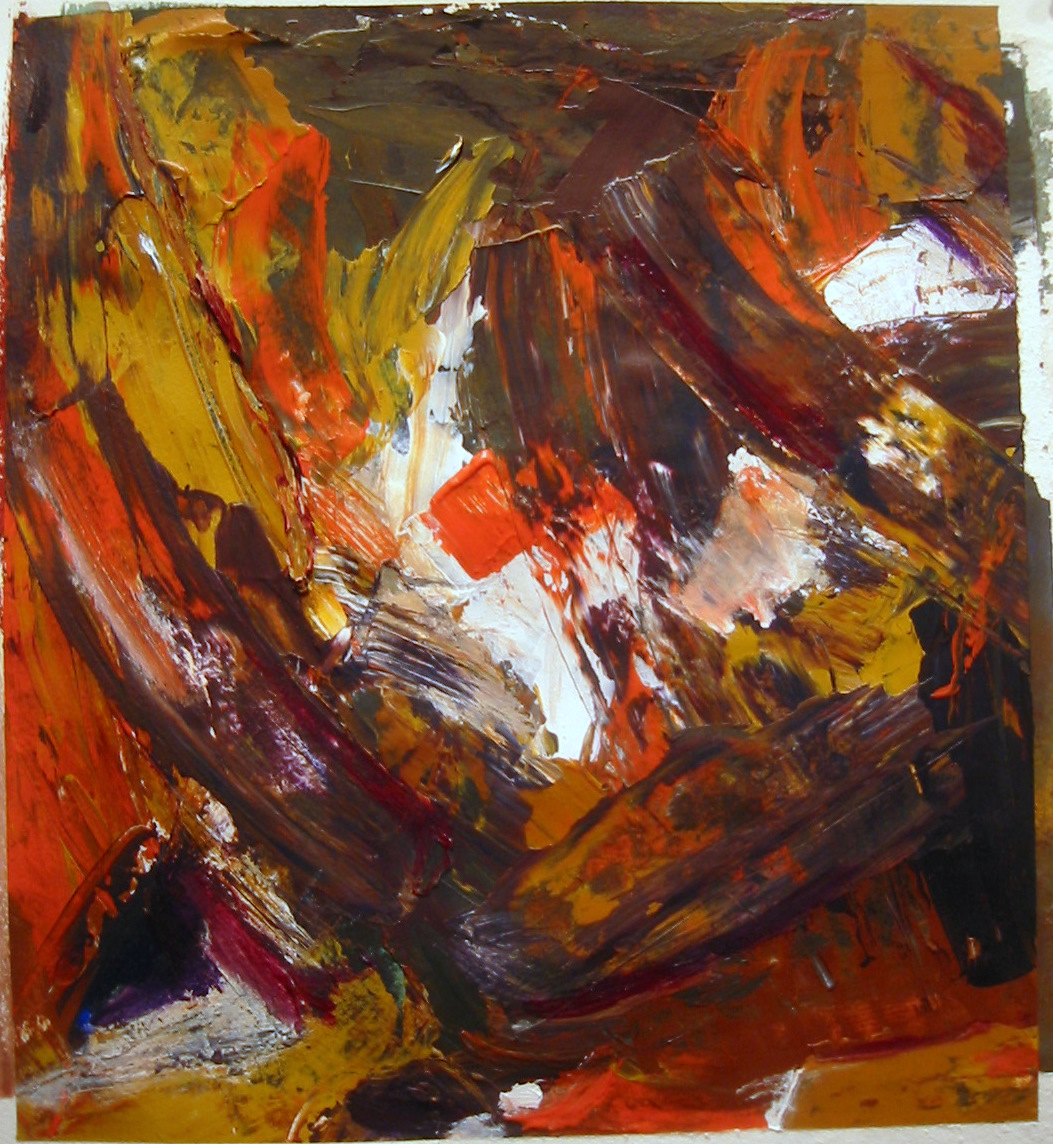
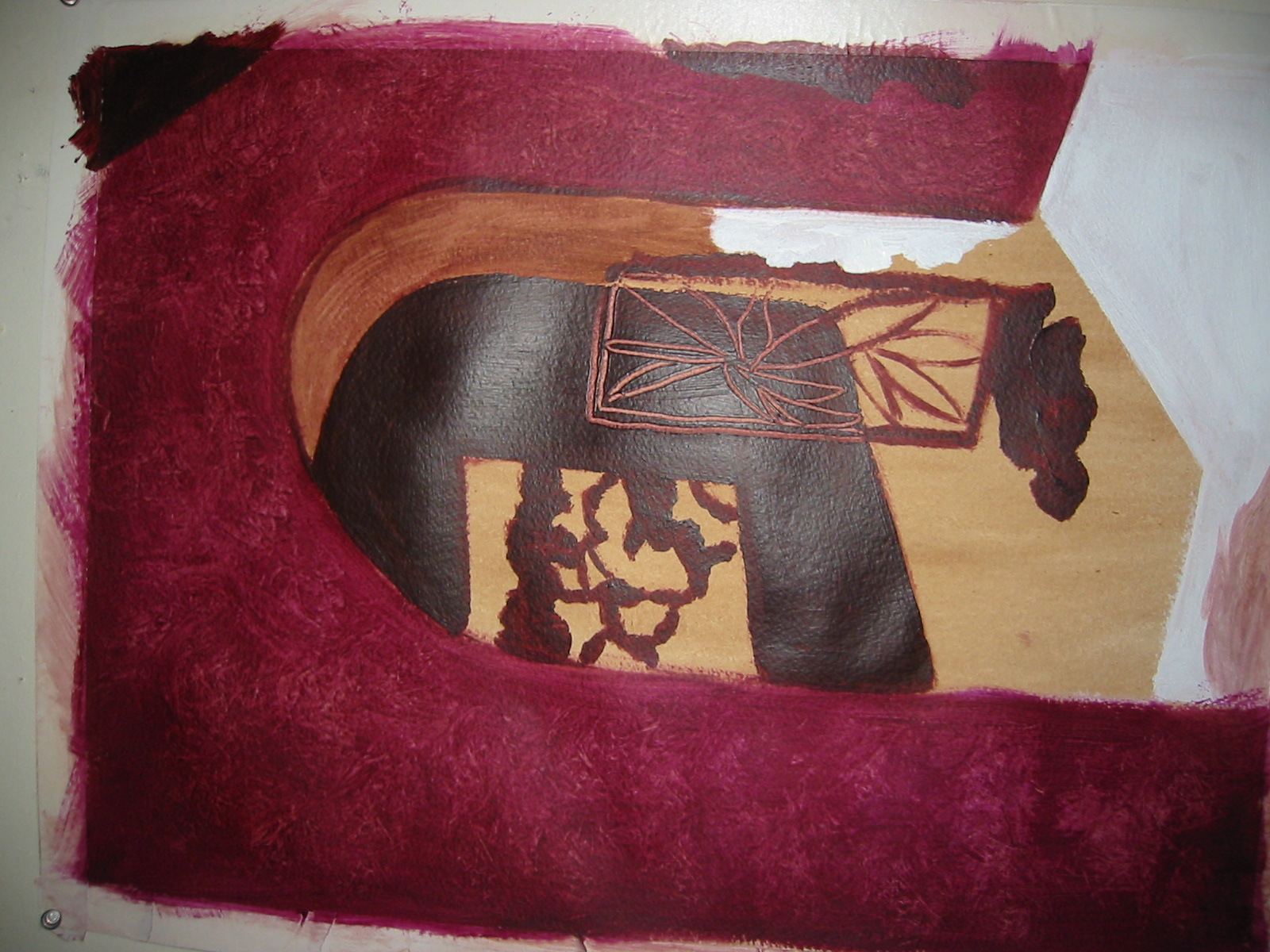
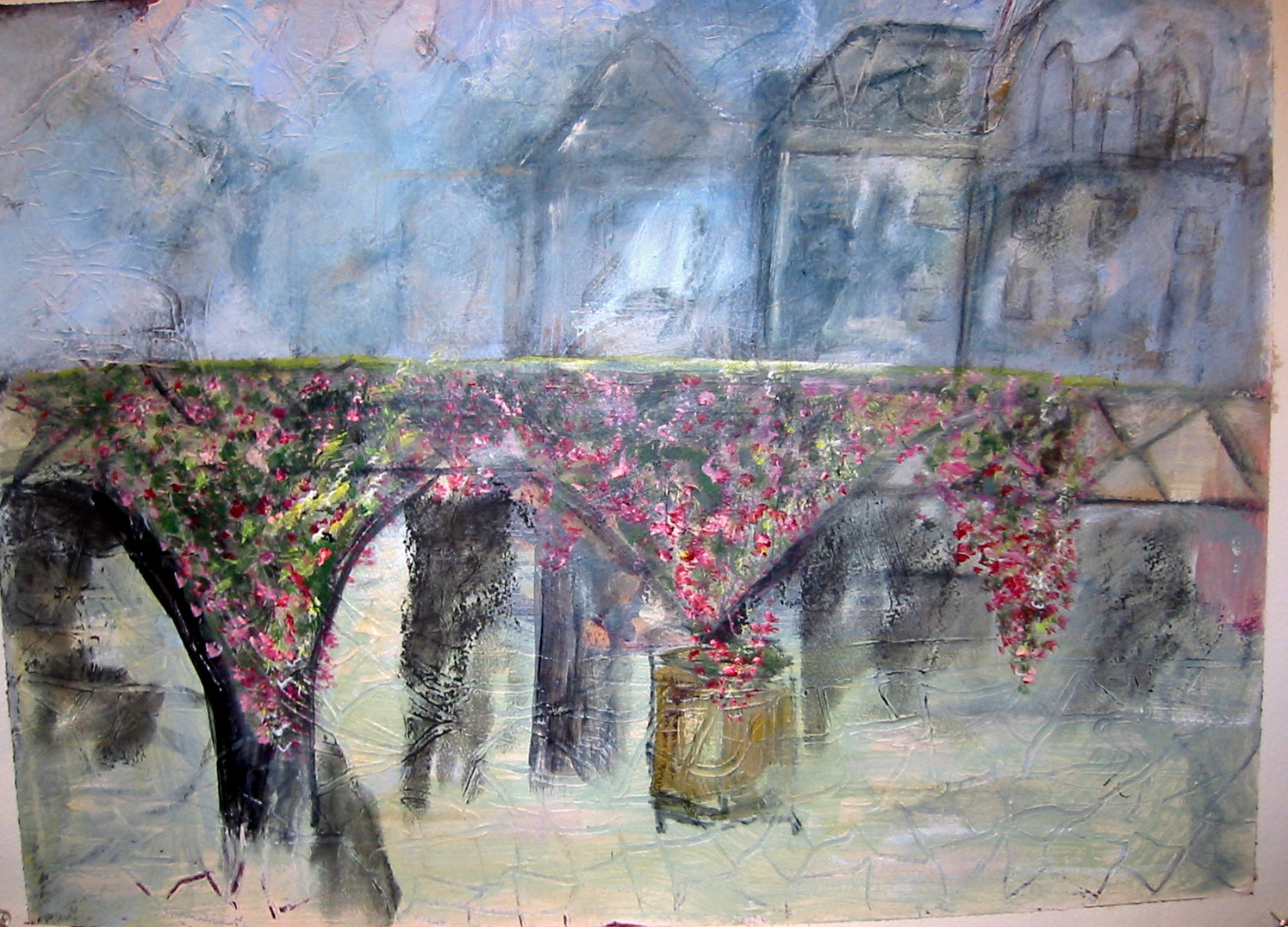
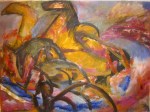
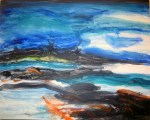
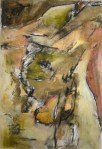
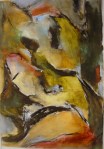
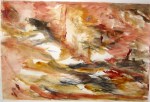
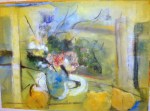
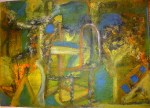
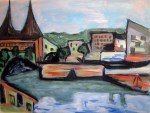
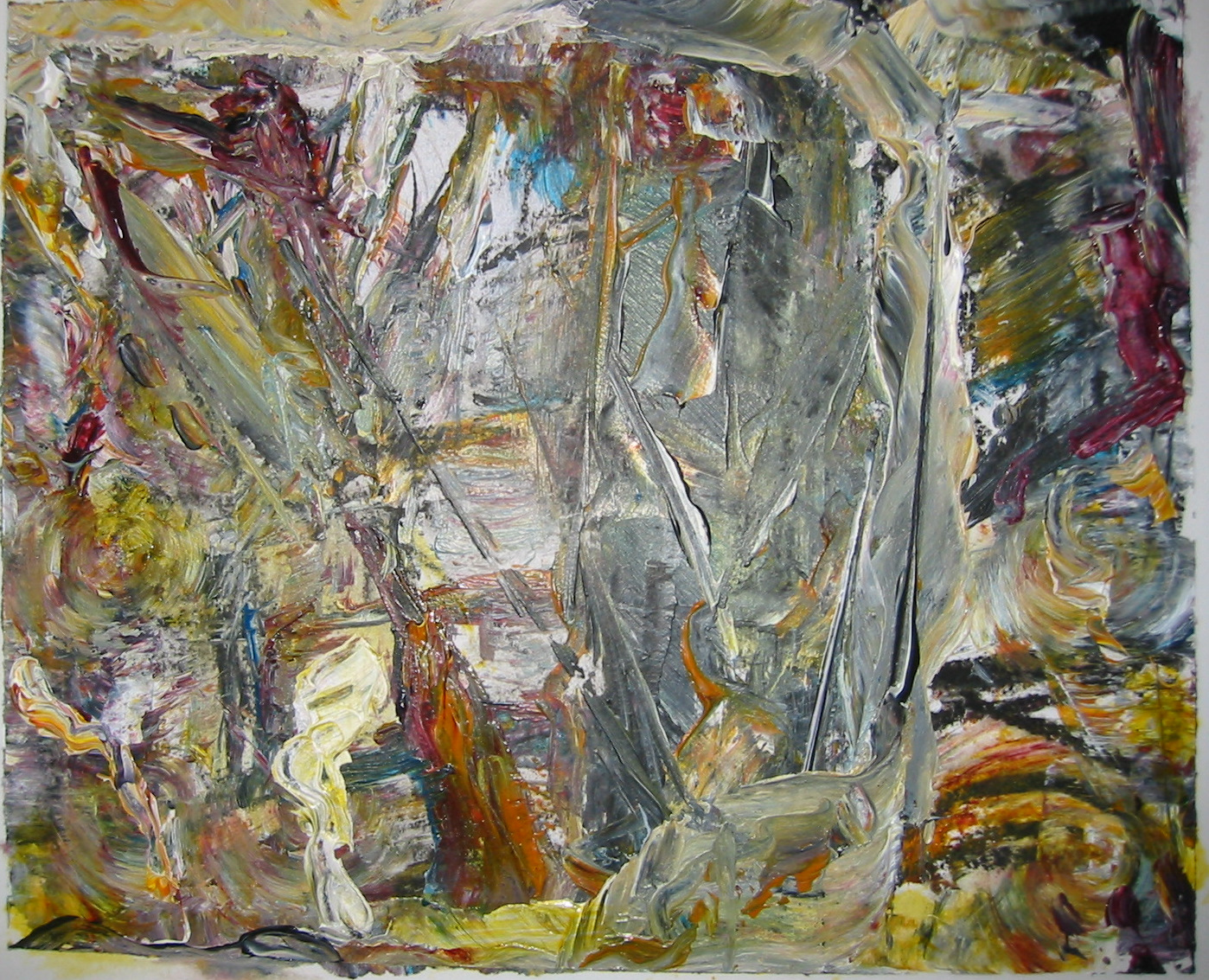
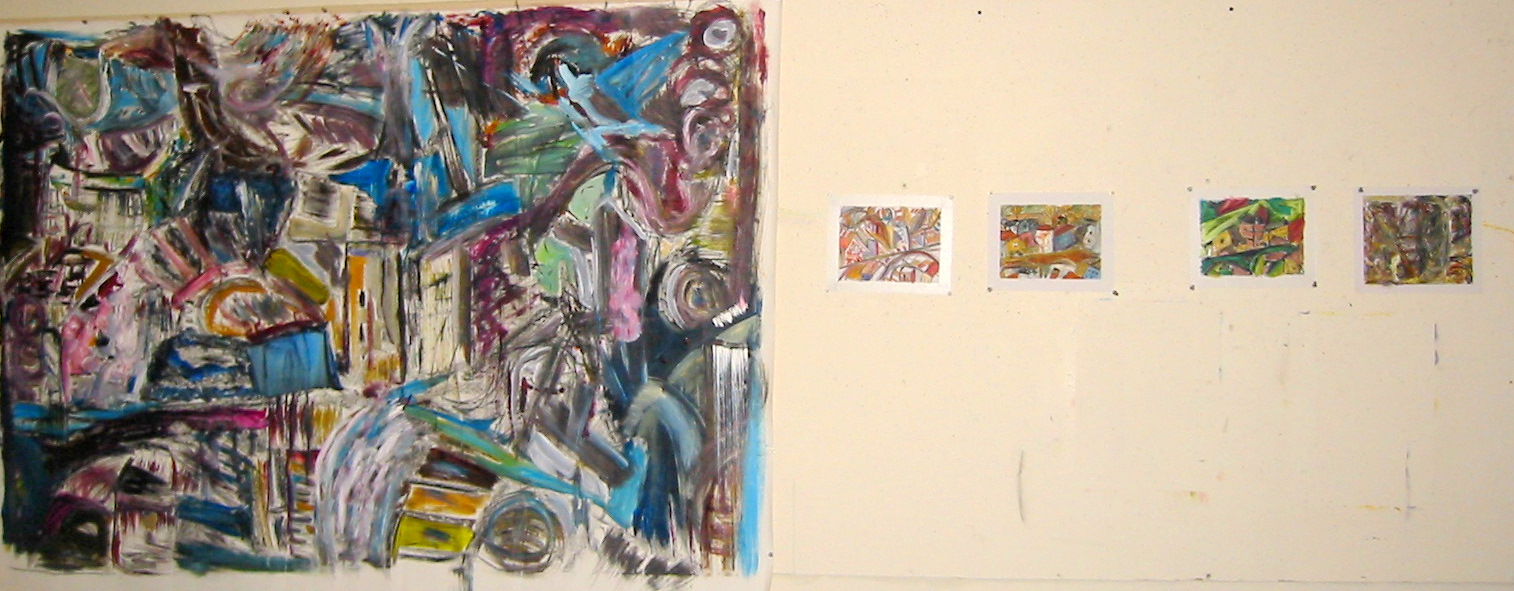
With ever-improving compositional skills each person took an unresolved painting begun by another and used whatever color, form, contrast, rhythm, texture and line that was in front of them as vocabulary with which to make their own visual statement.

This  challenge was very freeing to most people.  Because the work began with “a response” they felt less pressure to “create”. But can’t all painting begin with a response?

Philip Guston:  “I don’t know what a painting is; who knows what sets off even the desire to paint? It might be things, thoughts, a memory, sensations, which have nothing to do directly with painting itself. They can come from anything and anywhere. ”   http://en.wikipedia.org/wiki/Philip_Guston Just add: awareness, sensitivity presence and whatever skills have accumulated thus-far.

Actors often speak of voiceover work as being more fun because it is less intimidating. They feel a bit more anonymous. Perhaps beginning with marks already made, color already referenced and shapes already suggesting is also less intimidating in a similar way.

Remember this ease in the future.

These works are still in progress.  The group voted to continue, so we will……

(The underpainting is on the left, the next work in line is the new work in progress. Move the cursor over the image to see a caption-excuse typos & blurry pics.)

Posted in Uncategorized | Leave a comment

New Pics-Sarah’s show

Sarah was invited to exhibit her work at Frame Central last November.  This last July we got to see it on the walls.  Photos from the ending night can be seen in the link on the right. http://picasaweb.google.com/JoAnnGilles/SarahErwinAtFrameCentral72010#

Michele was showing at the Frame Central in Tigard.  Unfortunately, for several reasons,  we didn’t get to see that show.

Frame Central may be a good venue to begin or enhance a resume.

Posted in Uncategorized | Leave a comment

Voiceover 08/04/2010

Hi All,

Our figure work for the past weeks focused on the energy and the spirit of the subject merging with the artist’s hand.  Authentic mark-making enriched much of the work even when it was reaching and searching to find the form.

The exercise was also about creating a space, an environment, a world, whether real or imagined, in which the figure could exist. This is another way the individual artist makes a statement.

This week we will push toward more of that individuality by using a cast-off piece from a classmate as an underpainting.  Think of it as hearing your own voice in concert with another.  Exact instruction will be in class as usual.  But if you’ve taken you work home, bring some unfinished discard to trade with another.  There is a lot of work under the table, so if you are too new to us to have such “discards” like Nan and Simone, we will have one for you. 

If you are aghast at the idea or can’t bear to have your work touched by another, then we will have under-paintings for you too.  If that is the case try to remember this: our endeavor is all about the journey and the discovery not about the end product. The paintings are worth nothing and everything at the same time.  The true value is in the doing and the discovery. A successful end of the process is “dessert” so to speak, but our focus is more about the balanced meal.  (I can relate anything to food.) 

It’s a good time to consider experimenting with new materials and media.  You won’t be able to pre-plan (good) because you won’t know what your base will be, but you can gather collage elements and any other media that sparks your interest. SUBJECT—choose your own subject; make a personal still life; paint from an object; use a photo; use a master painting; try a self- portrait, or any combination you can think of.

Below in italics is a recent Robert Genn post for “The Painter’s Keys”– his bi-weekly blog.  He says some good stuff that occasionally meshes with our current activity. I’ve edited a bit and highlighted for emphasis.

 “…….how do we translate our life experiences into our paintings and express who we really are? We may have good work habits, but how do we become clear about what we want to say? And how much can be done with a conscious plan?”

This is one of those sticky head-scratchers that can cause the loss of sleep. First off, and contrary to what I’ve said before, plans can actually derail the voice-finding process. Further, you have to know what you mean by “voice.” Voice in style is different than voice in cause. Ideally, style develops over time. Cause is based on attitude and issue. With growth and development, causes change. A predetermined voice shackles creativity. To find your very own voice, I think you need to have a few things going for you:

You need to make stuff. Artists who put in regular working hours find their voice. Work itself generates clarity and direction. It’s like invention–one thing leads to another. One must only lurk for voice. Unfortunately, along the way, most drop the ball. (sic)

You need hunger. It can be the hunger for knowledge or for self-knowledge. It can be the desire to find an antidote for some injustice or human miscalculation. Perhaps you need some inexplicable, deep-seated compulsion to keep moving forward.

You need curiosity. Wondering how things will turn out is more powerful than having a pretty good idea beforehand. Wondering if you can do it gives you reason to try. Curiosity is the main juice of “ego-force” that keeps you keeping on.

You need joy. You need to feel joy in yourself and you need to feel you’re giving it to others. As Winston Churchill said, “You may do as you like, but you also have to like what you do.” A disliked job is soon abandoned. (not so sure about this—it’s a nice thought, but…..)

I’m writing you from a remote anchorage off  the West Coast of British Columbia. (sic). Every time I go onto one of these islands looking for something to paint, I ask myself the old “What’s my voice?” question. One thing for sure, if I go ashore knowing what my voice is, it will be a weak squawk when I get to the spot.

One of the best ways to discover your own “visual voice” is to spend a lot of time looking and observing your reactions to what you see.

See YOU soon…j

PS. Just heard about an ochre crayon that is 165,000 years old!! Think about that– evidence that the need to express with marks and symbols has been around a long time. Our ancestors had a need to paint too….  

Posted in Uncategorized | 1 Comment

Week of 7/25/10 & Figure studies in progress

Hi All,

Contrary to the way it is with other endeavors in which the more proficient one becomes the less time is needed to complete a task, in art, accomplished often means more time is needed to “get to the end”.  And fewer exercises are necessary to spark the fire.  Instead of getting “faster” you go deeper, developing your individual style and statement.  This week’s class will be that time to work.

The figure sessions were inspirational. The approach and the interpretation are becoming increasingly more sophisticated.  As fears are abandoned people are willing to not merely render the figure, but interpret the figure and put it into a meaningful context of one’s own.

Work on whatever you need to with the idea of pushing it further than where you left it.  Look at books and ask for critiques.  Glean energy, support and feedback from the group.  If you are stumped, or so new you have little to work on, let me know and we’ll come up with a direction together.  

Here is the link to the photo album of last week’s work:

http://picasaweb.google.com/lh/sredir?uname=JoAnnGilles&target=ALBUM&id=5498804522860488177&authkey=Gv1sRgCNiy4_jip5ffCQ&feat=email
See you all soon.

Hope Susan is feeling better—WE MISS YOU!!

J.

Posted in Uncategorized | 6 Comments

Go Figure

A central component of Western art history has been the study of the human figure from living model.  Not only has drawing the human form been considered crucial to the developing skills of an artist, the model has historically served as inspiration and muse for artists from the Renaissance onward.

A live model brings an energy to the room, to the artist, and ultimately to the work that other subjects do not. It is an intangible force that can literally enliven the marks on the page.

We are fortunate to have a fabulous model in our midst,  Autumn, who will be modeling for us this week.  She helps to bring us that “buzz”. If you surrender to a connection to this power and are not too concerned with proper proportion, how to draw a face or fingers, etc. you may be surprised to see El duende emerge.

For the uninitiated: “El duende is the spirit of evocation. It comes from inside as a physical/emotional response (sic). It is what gives you chills, makes you smile or cry as a bodily reaction to an artistic performance that is particularly expressive.

The meaning of duende as in tener duende (having duende) is a difficult-to-explain (sic) concept in Spanish art, particularly flamenco, having to do with emotion, expression and authenticity. In fact, tener duende can be loosely translated as having soul.” (courtesy of Wikipedia)

We are going to combine working from the model with working from the masters.  In the last couple weeks we have been scrutinizing and studying masterworks to begin a painting. Utilizing their structure and interpreting their vision created some unique, sophisticated artwork. (Pics of the works in progress for this exercise can be seen on a previous blog- Works in Progress for “Under the Influence” . “Finished” works will be posted later as they are more fully resolved.)

Continuing that thread, look at how artists you admire have painted the figure. Note the space it occupies.  Is it architectural, ephemeral or imaginary? Where/ how does the figure fit on the page? Is there a narrative content or an especially expressive manner of applying the paint? Is it “carved” into the bigger whole?  Has it been edited to flat shapes and planes of color?  Below are links to some examples, gather others as you like: http://en.wikipedia.org/wiki/File:Henri_Rousseau_005.jpg

http://en.wikipedia.org/wiki/File:Chicks-from-avignon.jpg

http://en.wikipedia.org/wiki/File:Amadeo_Modigliani_012.jpg

http://en.wikipedia.org/wiki/File:Kooning_woman_v.jpg

http://en.wikipedia.org/wiki/File:Peter_Paul_Rubens_111.jpg

http://art100.wikispaces.com/file/view/Matisse_Blue_Nude_4a.jpg/33374755/Matisse_Blue_Nude_4a.jpg

http://www.fineartsportugal.com/Art/artists/giacometti/artwork_images_380_434535_alberto-giacometti.jpg

Following are quotes that illustrate the attitude of some other artists about the model:

“I try to keep my sitters moving and talking, to make them forget they are being painted. This has nothing to do with extracting intimate secrets or confessions, but rather with establishing, in motion, an essential image of the kind that remains in memory or recurs in dreams. I could not do this if my sitter had to keep still … or to hold a stiff pose until we were both sick of it. A person is not a still-life – not even a dead person.”
Oskar Kokoschka, 1974.  http://www.gseart.com/artworks/artview.asp?ArtID=21&scale=0

 “The aura given out by a person or object is as much a part of them as their flesh. The effect that they make in space is as bound up with them as might be their colour or smell … Therefore the painter must be as concerned with the air surrounding his subject as with the subject itself. It is through observation and perception of atmosphere that he can register the feeling that he wishes his painting to give out.”
Lucien Freud, 1954. http://0.tqn.com/d/painting/1/0/t/o/1/Leigh-Sofa-s.jpg

“Cézanne rushed forward: ‘You wretch! You have upset the pose! You should sit like an apple. Whoever saw an apple fidgeting?’ Motionless as that fruit may be, Cézanne was sometimes obliged to leave a study of apples unfinished. They had rotted.”
Ambroise Vollard, 1936, on posing for Paul Cézanne. http://www.wetcanvas.com/Community/images/11-Jun-2009/131562-470.jpg  (Look at his figures–He may have “invented the apple”, but human beings shouldn’t be painted like apples. According to many accounts, he didn’t like people much. I think it shows.)

As always we will begin with warm-ups  setting the mood for the “Duende to come down.” Try to come to class relaxed and open to experiencing the whole being more than the sum of its parts.

Model fee $6.00–please bring cash.

See you soon, j.

Ps. As a challenge, try to put all the images in the links in chronological  order.

Posted in Uncategorized | Leave a comment

New Pics Posted

Shawn gave me a flash drive at least 6 months ago with photos of our last open studios.  I Finally downloaded, cropped, etc. Check the Picassa Web Album link to the right under blog roll—–>

Posted in Uncategorized | 1 Comment

Works in Progress for “Under the Influence”

Hi All,

Scroll over each one to see who did what. Being under the influence was inspirational!  Here are the results of the first pass at the exercise. A suggestion-  print several copies in color and black and white and play with them.  turn them, use different media, different materials. Adjust in any way that hits you, then push it and do something that comes from the wildest part of your imagination. This week we are continuing work on these.  Saturday classes are very light so Wednesday people please feel free to continue make-ups.  And Saturday people, we almost always have room for Saturday make-ups, but please double check the afternoon of the evening you plan to attend.  See you soon,  j

Posted in Uncategorized | Tagged | 6 Comments

Under the influence / Work Study

Hi All,

Sometimes the lessons come easy, sometimes they are hard to coax forth. As with most teachers, considerations are many when developing a class:

  • What should the follow-up be to deepen the experience of the past class/es?
  • Who needs what in terms of levels of understanding in order to progress?
  • How to intensify the connection between our multi-facets?  (right brain/ left brain, analytical/emotional, etc.)
  • How to build confidence in those who need it most?
  • How to magnify a particular class member’s current direction so it can inform future work?
  • How to keep the fire ignited in someone who is on a roll? How to ignite others?
  • When is it time to simply have fun?

And about 100 or so more.

Of course there are the basics to impart like how to mix a color or develop a composition. But my philosophy is to always seriously  consider the former when figuring out the latter.

You may wish I would just stick with how to apply a wash or how to draw an apple.  But that wouldn’t be as much fun. It is the marriage of the emotional, psychological, the self-discovery and spirit with the practical–the formal elements of line, color, perspective, etc., that makes the challenge so interesting.

That is my “teacher” job. Your job described by people smarter than I can be described as follows:

“The job of an artist,” Jonah Lehrer writes for Psychology Today, “is to take mundane forms of reality—whether a facial expression or a bowl of fruit—and make those forms irresistible to the human brain.”

“An artist’s job is to captivate the audience for however long we’ve asked for the viewer’s (sic) attention.” -Aaron Sorkin

“The purpose of the artist… is to take the life which he sees and raise it, raise it up to an elevated position where it has dignity.” -Tennessee Williams

Albert Einstein says “The most beautiful thing we can experience is the mysterious. It is the source of all true art and all science.”“The job of the artist is always to deepen the mystery.” -Francis bacon

And as has been mentioned a 100 times before, an artist’s job according to Martha Graham is to “Keep the channel open”.

Among these job descriptions and others, I say our job as painters is to 1) keep the “pot” simmering or, better yet, get to a boil. Continue to nourish that part of you that captures your own imagination. And 2) be motivated to explore and experiment. Approach the work as if you have no idea of how the painting should look. You can come to it with an idea but always have a sense of discovery.  Be an explorer. Be ready to ask the question: what happens “if”.

This week and next, take the underlined words: Irresistible; captivate; elevated; mysterious; deepen; open; and discovery and use them to guide you in interpreting the work of a master. You will benefit from their influence.

(See Robert Genn link to his piece on Influence and links to the paintings that influenced Lautrec 2 Degas’ “Girl Brushing Her Hair” and Degas’ “Tub” )

Choose a painter that is considered a “master”. (Either bring in an image, or choose from the many in the studio.) Using your highest powers of observations, ask what makes it a masterpiece?  What makes it______? (Fill in the blank with any derivation of the words above and try to answer the question.) Why did you choose it?

Ask questions of the artist and let the painting give you the answers. For example: Where is the focal point? What is the palette? What does the palette communicate? What is decidedly put in the picture plane and what was left out?  Is there deep space—how was it created?  How does your eye move around the page?  What is the painting about?  If it is a figurative or representational piece, how would you reduce it to lines and shapes?  If it is an abstract piece, how do the lines and shapes create interest, deep space, suggestions of time or place, or an idea etc.  Play with both concepts. When questions arise about technique, ask me. I may or may not be able to answer them, but we” experiment together.

This is the kind of practice that will move your work forward.  Be open to an unexpected result.

Materials and substrate—anything your imagination leads you to.

There may be some planned absences for Wednesday, I forgot to look, but Janet will be joining us.  And on Saturday Sarah’s mother from Tucson, who is a watercolor artist, will be joining us.

See ya soon,

j.

Ps.  The photo above is the Place Massena, Nice France

Posted in Uncategorized | 5 Comments

Summer 2010…

Today is the start of the next phase of ArtHouse23’s push into a higher art consciousness.
Posted in Uncategorized | 9 Comments

artHouse 23

Art Class--Exercise in the impact of scale

Art Class--Exercise in the impact of scale

Posted in Uncategorized | 1 Comment