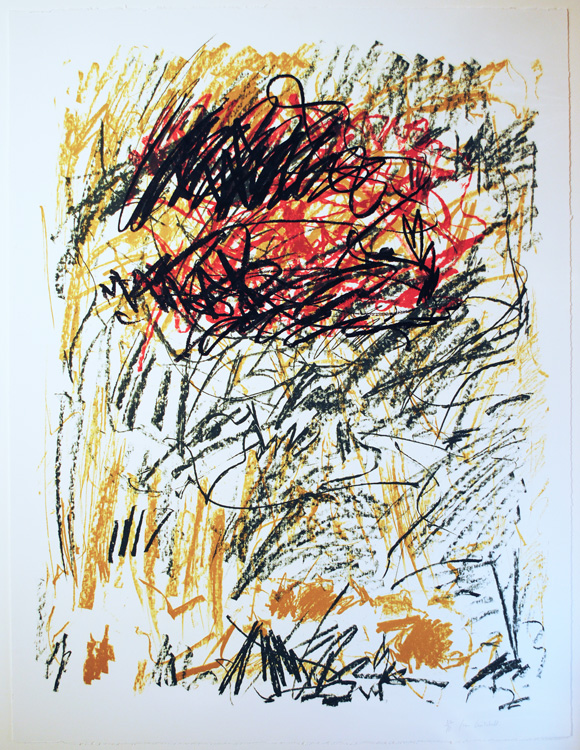
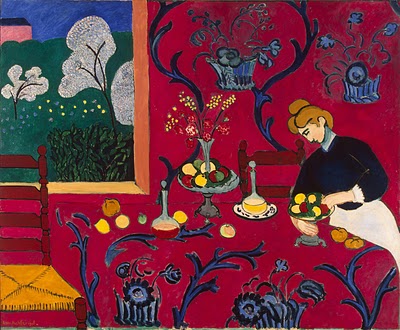
Life drawing.  It can strike fear in the hearts of anyone who does not possess a natural knack for rendering line, form and proportion.  Life drawing/painting can be challenging to be sure, and the practice of it will improve anyone’s facility. But I would bet that most people, when considering life drawing, imagine that an arm needs look like an arm or a head to look like a head.  And although that skill requires a certain ability that comes easier to some than to others, and should be admired, it is really the least interesting part of figure-inspired art.

So you got your Leonardo’s and your Michelangelo’s and you got your Durer’s and your Raphael’s, Titians, etc.  And you can’t forget Botticelli and Rembrandt, although Rembrandt mostly painted people with their clothes on. No question—they’ve brought us awe-inspiring beauty in the form of the human body, which has been one of the principal subjects for artists throughout history.  But it is NOT accuracy that makes their work beautiful, soulful or keeps it speaking to the ages.  Consider some of the most revered works of one of these titans—Michelangelo’s “Awakening” slaves, unfinished sculptures that are often described as the figure emerging from the stone.  (One example- http://sistinepuzzle.com/wp-content/uploads/2011/12/michelangelo-st_matthew.jpg  )

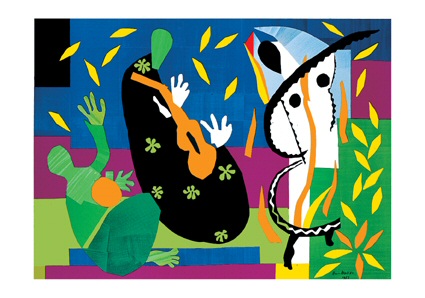
Then think Matisse, Francis Bacon, Bonnard.

So if it is not depicting accuracy that causes viewers to be awed and brings the artist back again and again to work with the figure, what is it? A long list of answers is possible, not the least of which involves the energy that a live model, especially a good model, brings into the room.  And then when an artist, sensitive to that energy, to that life force, brings it to the page.

You are all sensitive, but we may have to short circuit some of the expectation in order to connect.  (I’m seeing: Back to the Future –when the lightning strikes the clock tower.)  So come willing to press hard on the graphite or charcoal.  Or hold the brush with your non-dominant hand.  Be willing to keep your eyes on the model to maintain connection and let proportion be damned.  Be willing to see the subject in different ways, like we discussed with the flowers. Be willing to be unique in your vision. Be willing to let lightening strike.

I will have a few ideas for people to try.  We will do warm ups and several short poses, and perhaps two longer poses.  You may need some bond paper or newsprint if you don’t want to use newspaper for warm-ups and short poses, and at least one larger sheet—it can be an under painting if you’re comfortable with that.

Let the DUENDE come“Duende” is a term often used in Spain to describe flamenco singers or dancers who have/transmit that untranslatable quality. It would be a mixture of strength, rapture, rawness…It can be used in any other context by extension, to describe someone or something that has much depth and impact  (not accuracy)~ Spanish Translator, Susana Galilea

Posted on by joanngilles | Leave a comment

Where Have All The Flowers Gone?

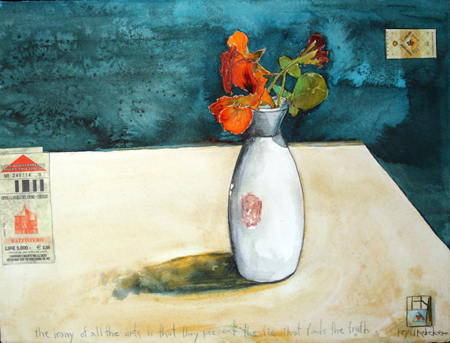
There is long history of floral painting that all but disappeared by the mid-20thcentury.  Asian artists, especially the Japanese and the Chinese found endless inspiration in the natural world and included flowers as a symbol, not only the transitory beauty of life, but also the healing, poetic, power nature delivers in blossoming flowers.

            Softly waving above the jade pool: white lotus blossoms.

Going, coming, blue birds are tranquil and silent.

The hermit doesn’t drink, but leisurely carries

his staff,

Merely recalling the pure fragrance of flowers in the

moonlight. 

Ch’ien Hsiian 1235-1307—Chinese floral painter and poet

The Greeks and Romans and Egyptians carved flowers into friezes, signifying everything from paganism, to rebirth, to the power of motherly love (daisies in association to the Virgin Mary), to roses representing the blood shed by Christ.

Floral design with a complex set of symbolism decorated illuminated manuscripts in the middle ages.  You’ve all seen these, picture them in your mind’s eye.

In Holland in the 1630’s some tulip bulbs were auctioned for more money than the most expensive houses in Amsterdam. Realistic paintings of flowers purchased by Dutch families as substitutes for the real thing were also an indicator of wealth and class.

After the microscope and telescope were invented the idea of the science of flowers became popular in paintings. And once societies broke free from a dominant religion, flower paintings became a common substitute for religious-dominated themes in art.

See the “Water Lilies”. Monet said: “I perhaps owe having become a painter to flowers….” The floral painting tradition was strong with the impressionists and the post-impressionists––think Van Gogh.

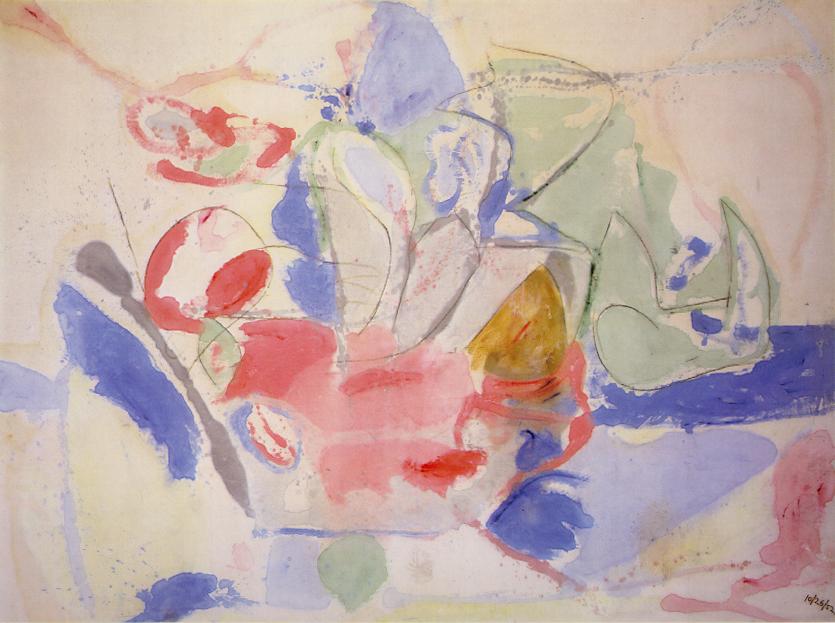
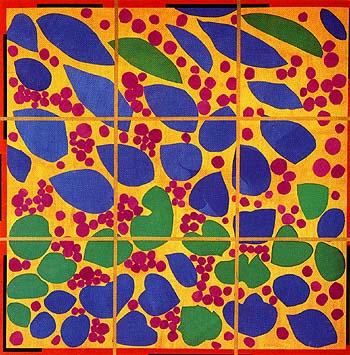
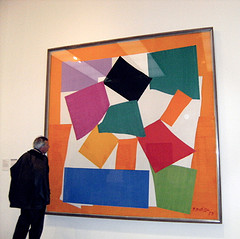
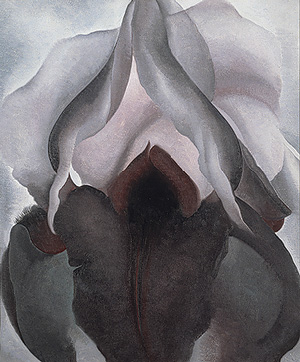
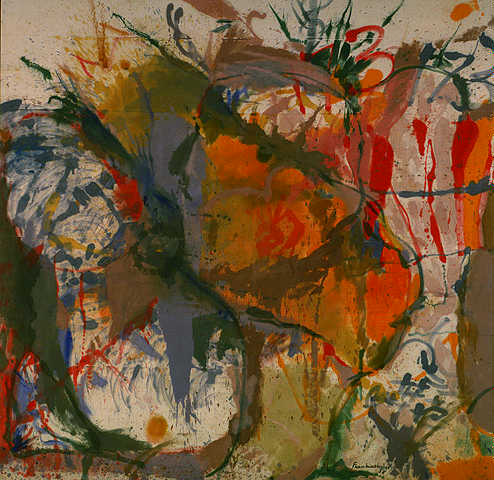
Matisse and Picasso made wide use of patterns created from flowers. And, as we move through the 20th century, see Georgia O’Keefe’s and Helen Frankenthaler’s large, important abstractions of flowers as their only monumental subject.

Germain Greer in The Guardian (7.13.2008):“Despite the phenomenal marketability of flower paintings, no one does them any more…  Modern botanical art, characteristically, appears unaware of a picture frame; the specimen portrait floats in nothingness, ready to be cropped or reduced at the whim of a designer. All emotion ebbs away, to leave nothing but detail.

Flowers have movement and habit. We recognise a wildflower in the distance not because we can count the number of anthers, but because of the way it dances. Its stem has pliability or stiffness as well as colour and dimension. The difference between botanical art and flower-painting is the difference between the illustration in your field guide and the bird on the wing.”

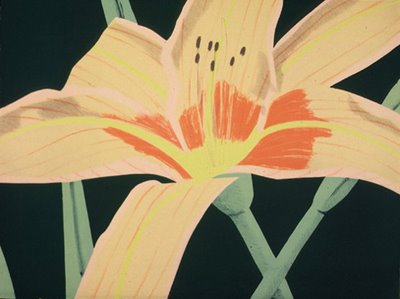
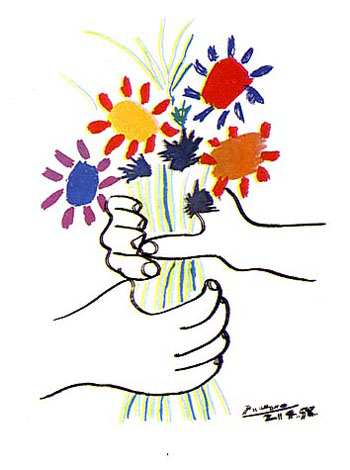
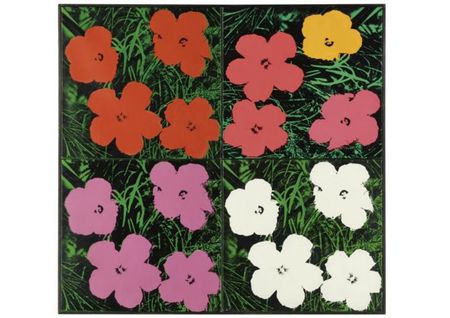
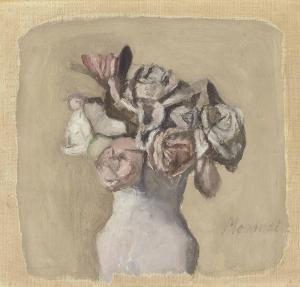
You might have guessed, with spring and sunshine and all, we are going to paint flowers.  SO PLEASE BRING ONE.  (I will have some back-ups.)

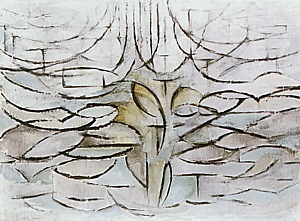
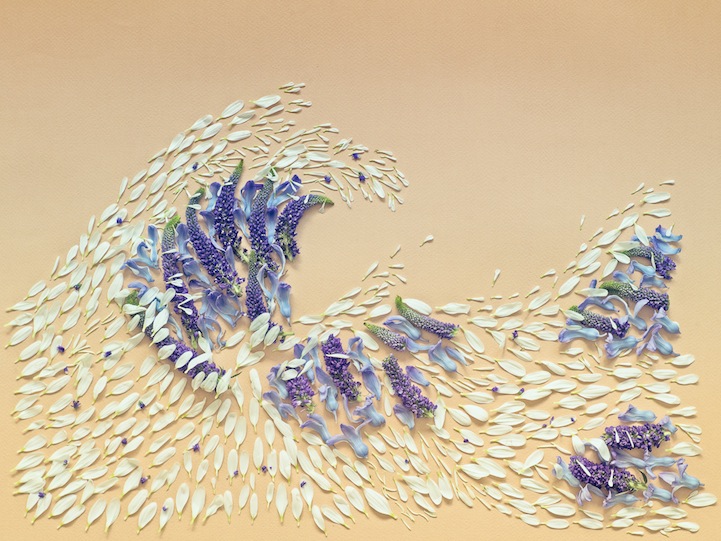
As this idea steeps in the next few days, see the flowers you pass in context to a larger image. Experiment mentally with how they might fit in the “picture frame”.  Do not be concerned with detail. Do be concerned with emotion. See it move, see it unfold. See it fade. Try to stretch you vision to see a flower/s in something other than a vase, a pot or a planter.  Imagine.

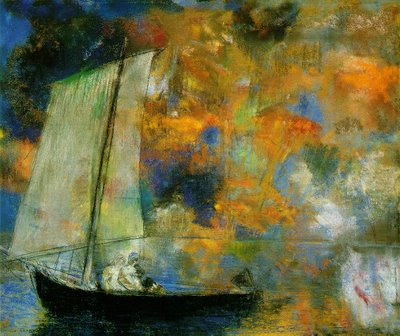
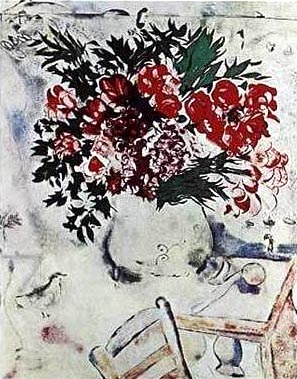
Work within your skill set. Because you may not be able to render a flower doesn’t mean you can’t compose an impactful picture plane.  Some more modern looks at floral-inspired paintings follow. Notice the

This slideshow requires JavaScript.

variety. We’ll look at them in class too.

Posted in Uncategorized | Leave a comment

Build it and They Will Come

What did we just do?  Such a whirlwind of preparation, organization, socialization, libation, etc. –where does it lead?  To confirmation, validation, substantiation and authentication?  Perhaps.  If we pay attention.

Max Ernst—A picture is not thought out and settled beforehand; while it is being done it changes as one’s thoughts change.  And when it is finished it still goes on changing, according to the state of mind of whoever is looking at it.  A picture lives a life like a living creature, undergoing the changes imposed on us by our life from day to day. That is natural enough, as the picture only lives through the person who is looking at it.

The emergence of an image in art-making is “not thought out and settled beforehand”. It’s a conversation.  One move responds to the previous move, influenced by the light, or the music, or the way a tube of color finds itself in your hand, or even a spill on the page.  Then the act of selecting works to exhibit, deciding if they are what you want them to be, setting them apart with mat and frame, etc., then seeing them in context with other people’s work tells its own tale.

We live out loud in that conversation. When we give it an audience we allow for an exchange, for new perceptions and perspectives. Then it becomes a seed for new work, new ideas, a new conversation. How great is that?

On and onand on—next stop– an exercise to limber the imagination.  We’re going to work from changing slides–fresh paper, any medium (including collage, if desired).

Reflections on the process of exhibition are valuable.  So if you have thoughts during the week, please bring them to share.

This is an excerpt of what Gordon found on the net and wrote in the Caring Bridge last night.  It’s worth a read:

In Henry James’s short story “The Middle Years,” the main character, Dencombe, offers a summation of his life:

We work in the dark—we do what we can—we give what we have. Our doubt is our passion and our passion is our task. The rest is the madness of art.

Brian Morton burrows into the passage:

Let’s listen again to Dencombe: “Our doubt is our passion and our passion is our task.” I love the fact that he uses the word “passion” and the word “task” in the same sentence—the one so exalted, the other so commonplace.

More than this, I love that he equates them. Our passion is our task. To follow the calling of art, to keep faith with it, to continue with your daily labors despite the frustrations, the distractions, and the other varieties of madness that will inevitably beset you—all this requires passion, but it also requires something else, something more down-to-earth. Call it steeliness. Call it persistence. Call it tenacity. Call it resilience. Call it devotion. Indeed.

Posted in Uncategorized | Leave a comment

Break A Leg!

There were some nerves in the room on Wednesday night—an excellent sign.  We endeavor to take a risk and then we make it a public event. A case of nerves is normal.

But I’m here to tell you that you deserve to let pride supplant the nerves.  The work is excellent—honest investigations into wherever your interests lie at whatever your skill level is.  And better than last year?  Yes!  I’m sure you will all agree as you survey your “wall” that the growth is evident, (–even since the fall ReMax show.)  So congratulations one and all!

Suggestions to get the most out of your efforts:  Take time –this a great opportunity to see your work displayed as a whole. Let the socializing be quiet for a bit. Take a few moments to look at your work in context—how does each piece relate to the others?   Where are the commonalities?  The differences?  What are the strongest, most compelling passages or elements?  When you see a break-out piece is it a nod to the future?  Should it be a direction to persue?

Then look at your work in relation to the others—not to compare which is better, but to note the differences and the similarities.  Look at brush work and marks. Analyze composition. Imagine other color choices. What if Sheila’s trees were purple? What if Maxine’s figure was red? Learn from it. Steal the good stuff.  As long as your work is your quest, anything you steal will become your own.

The best thing about this ‘show’ is the way that everyone has worked so beautifully together.  Thank you. Little is more joyful, more life-affirming to me than being a part of something in which the good of the order takes precedence. Teamwork is a tonic.  By its very nature exhibiting one’s art work is a lot about individuality and ego–in a good but potentially too-vulnerable, or even a destructive way. So the support, the helping hands and encouragement that everyone’s been so willing to give is just a little bit remarkable.

Hat’s off! Much gratitude!  Break a leg!

Posted in Uncategorized | Leave a comment

Silence is Golden

(Have you noticed my penchant for using 60’s song titles?)

An introduction from the New York Times’ Ken Johnson to Agnes MartinMay 19, 2000. “Whether Agnes Martin’s new stripe paintings are works of transcendentalist beauty or of sensory deprivation depends on what beliefs viewers bring to them. Each canvas is a pale five-foot square bearing horizontal bands of watery color separated by penciled lines. Ms. Martin’s iconic persona, her reputation for mystic spirituality and titles like ”Happiness-Glee,” ”Lovely Life” and ”I Love the Whole World” encourage discovery of a kind of pantheistically charged aesthetic resonance. Taken on their own, however, these paintings do not generate much visual excitement.” (For more on Martin: http://www.moma.org/collection/artist.php?artist_id=3787 )

When watching a video of Agnes Martin I was impressed not only by her presence and what she had to say, but by her commitment to her process. As she was being interviewed, describing how she prepared and approached one of her 5’ by 5’ canvases (this, by the way, was when she was in her mid- ‘80’s) she was applying a thin layer of watered, acrylic wash in a 2 inch stripe with a 2 inch brush. It was not much different than watching my friend Sally paint around the woodwork in her living room.

But then something happened that illustrated the power of the practice of art-making. With brush to canvas, as she was coming to the end of one of the identical, vertical stripes, resembling those that already occupied the surface, she seemed to physically “disappear”.  Not like David Copperfield, but it was as if her physical presence became suspended in an aura of energy.  She stopped talking mid-sentence as the brush continued to hug the line it was following.  She seemed to need every bit of concentration to complete this one, simple line, the kind of line she had made a thousand times before. The line was the visual symbol of her esoteric thought, the thing that makes her a world-class, museum-worthy artist. And it was clear to the interviewer at that moment that “silence was golden”.

The latest Robert Genn newsletter mentions the value of silence: Silence focuses your eyes on your process. When you do not surround or precede your effort with your own verbiage, meaning and purpose are more likely to come out of the end of your brush.”

Aspiring to be world-class, museum-worthy artists probably does not define many in our group.  We are about something different that has its own rewards and set of values.  We are also about community and support and the mere fact that we are a “group” implies interaction.  However, after an initial greeting and catch-up many people in our group do aspire to that feeling of “disappearance”.  And it’s almost impossible to achieve when there is endless chatter.

I’m not suggesting that we become a cluster of monks while working.  But I know how continual chit-chat degrades not only the process but the outcome. And if that doesn’t matter to you personally, please be aware that it may matter to others.

Talk about the work and seeking advice from others, etc. is about what we are largely about. So please do not hesitate to engage in that kind of communication.  But try to avoid discussing the weekend activities, etc. after everyone gets to work.  And if anyone is disturbing your concentration, even if it’s me, please do not hesitate to say something. Knowing the feeling of getting lost in a line in order to find something more is worth more than the satisfaction idle chatter may bring.  And I am happy to hold my tongue in order to facilitate it.

PS. It’s wonderful when people help each other with a fresh eye or a good idea.  But please wait to be asked.  If you have an idea, lead with a compliment. It will open a dialogue.

Posted in Uncategorized | Leave a comment

“I am on a loney road and I am traveling, traveling, traveling…” *

“A traveler experiences the unfolding nature of life while carried along by its currents.”  Mariellen, author of BreatheDreamGo, a travel blog about meaningful travel.

The “unfolding nature of life”—I see the Lotus flower that serves as a symbol for the process of self-discovery and enlightenment.  And “life’s currents” recalls the idea of the unexpected. Journeying not only allows room for the unexpected, it is ubiquitous to travel in foreign lands. And how we feel and react in unfamiliar situations and in strange cultures, being faced with the unknown, is revealing of our true natures.

My first trip out of the country was to Mexico in 1980 and I remember how amazed I was at the power of seeing myself “out of context”.  If hunger for meaning is at the core of the human experience, then  seeing the world and me in it from an entirely different perspective went right to the heart of that quest. My eyes opened wider. Connections grew deeper.

Over time I’ve learned how journeying and discovery can happen in the studio just as incandescently as it does far from home, especially if we allow room for the unexpected in our work. Proust wrote: “the true voyage of discovery consists not in seeking new landscapes, but in having new eyes.” That’s the challenge!

As we continue to work toward the show with emphasis on the “results” and not the process, focusing on persistently “having new eyes” is what will, ironically, deliver the highest and best results. Contrarily, concentrating on improving this or that will not get you there. If a piece isn’t working, continually beating your head against the wall as you try to achieve a predicted outcome is more likely to just give you a headache rather than the effects you desire.

The trick is to keep fresh—create anew, even if it means destroying that image you’ve worked so hard to perfect. Then respond. With a deep faith in your imagination and creativity and all that you instinctively know about composition, line, color, etc. react to what is in front of you.  At this stage of the game it might seem drastic to look at any of your paintings with this abandon in mind.  And most of them don’t require such radical actions. But if one is torturing you, be willing to take it to a new land. See what new viewpoints will do. Recall our exercises like the one last week.  Risk. The more you do it, the easier it will be and the greater likelihood that meaning will unfold.

*Title, of course, is courtesy of Joni Mitchell’s All I Want, from the 1970 album Blue

Posted in Uncategorized | 1 Comment

The words from the Simon and Garfunkel song—“Time, time, time, see what’s become of me…” roll around in my head. Layers of meaning as the knees creak and I catch a glimpse of myself in my iPhone when the camera shutter is backwards. (So scary) But really my revolving thoughts are about how much I have no time right now to think, to contemplate, to reflect, or to approach understanding of that which fascinates.  Saying anything in writing or in paint that may be meaningful, or creating a eye-opening exercise for class requires that stare-out-the-window kind of time.  So consequently, don’t ask me what the blog may be about or what we’re doing this week—I have no idea.

But I can steal something useful.  And then perhaps come up with something for class before the clock ticks too many times.  People need time to work on paintngs for the open studios, so that’s definitely on the docket.  We might do an exercise also, so be ready for anything.

My “loot” is the following list from Dee Dickenson, the founder of New Horizons for Learning, a premier educational resource at Johns Hopkins University School of Education. She lists 10 reasons why the arts are beneficial  for all “knowledge-seekers”–that’s us. ( www.education.jhu.edu/newhorizons )

1. They are languages that all people speak that cut across racial, cultural, social, educational, and economic barriers and enhance cultural appreciation and awareness.

2. They integrate body, mind, and spirit.

3. They provide opportunities for self-expression, bringing the inner world into the outer world of concrete reality.

4. They are an opportunity to experience processes from beginning to end.

5. They develop both independence and collaboration.

6. They provide immediate feedback and opportunities for reflection.

7. They make it possible to use personal strengths in meaningful ways and to bridge into understanding sometimes difficult abstractions through these strengths.

8. They merge the learning of process and content.

9. They improve attitudes, social skills, critical and creative thinking.

10. They exercise and develop higher order thinking skills including analysis, synthesis, evaluation, and “problem-finding.”

For those of you who take the time to hang out in your studios resist any thought that you may have that you are not being productive.  You are producing more of what the world needs. I salute (and envy) you.

As time marches on, so shall we.

Posted on by joanngilles | 3 Comments

Both Sides Now

Apologies for yet another blog in which Rothko is discussed. I can’t help but mine this rich opportunity of having his work and the play Red in our city. It opens the discussion about the more esoteric and mysterious aspects of art-making.  At the same time it is the perfect foil for discussing the formal elements of art, most notably, composition, with which we so often struggle.  Without good composition, all of the meaning, pathos, poetry and technique of pushing paint are reduced to a loose collection of unrelated ideas that rarely entices the viewer to stop and look.

Both sides of the proverbial coin– First Bruce Gunther, the curator of Modern Art at the Portland Art Museum speaks about Mark Rothko’s paintings.  (From a press talk at the museum in Feb.) It talks about the work in nonfigurative terms and leads the way to discussing art at a deeper level.

Then there is a link to The Painter’s Keys, a blog by Canadian artist, Robert Genn, which I occasionally reference.  Genn’s ideas are a more concrete way to think about the process.  His recent blog discusses composition in a particularly salient manner giving well-stated guidelines to good composition.

The mere fact that there is a spectrum this wide in which we can think about what we do with a piece of paper continues to fascinate.

My notes taken as Bruce Guenther spoke on Rothko:

The paintings are a container for all the threads of influence, ideas, and emotions that the artist experiences.

The surface expands and compresses working together in an optical experience that charges emotively as the viewer approaches. One feels connectivity with the quality of the Portland air, which surely influenced his work.

To Rothko, a formalist, the subject is secondary to the structure of the space.  Building the chiaroscuro up from the surface, the figure (subject) emerges from the background.

He eliminates drawing as the structure of the picture allowing color to form the imagery.  (An “emptying out” of line.)

He provides a cue or a prompt to open the door to the sensuality of color and light, rather than a specific image.

The paintings feel as if they are screening something from behind the surface, inviting the viewer into another world.

(Other Abstract Expressionists like Kline and DeKooning hold on to gesture)

Robert Genn’s “Six Compositional Boo Boos”: http://clicks.robertgenn.com/composition-boos.php

Enjoy the dialogue….


Posted in Uncategorized | Leave a comment

Shadows and Fog

Just for fun, on this day of the Oscars, we’ll make the connection between the movies and painting when discussing the important technique of chiaroscuro—definition: a pictorial representation in terms of light and shade without regard to color (line or subject). From the Italian— chiaro-clear, light + oscuro-obscure, dark.

Art historian Anne Hollander points out that cinema descends from a long line of paintings that demand to be “watched” rather than perceived.   Mark Rothko says just that about his work—it must be “watched” in order for the surface to quicken and for its arms to reach around and envelop you in the experience of light and dark and subtle value shifts.

Painters began working at this as early as the mid-fifteenth century.  Hollander describes artists in her book, Moving Pictures, whose aim was to heighten the importance of their subject by intensifying “the optical experience, rather than formal ideas.  This pictorial tradition…(sic) depended on using the mystery of surface to express the mystery of basic meaning.”  She talks about “the instability of sight…(sic) in the phenomena to reflect the uncertain movement of consciousness…The moving camera took up this same task since its work is done wholly by light….. but the dramatic formulas had already been provided by the painters who had  worked them out before.  Drama is guaranteed by using optical experience to stand for psychological experience, to mirror and engage the viewers’ soul rather than to gratify his conscious understanding.” (Read more: http://books.google.com/books?id=TrsyCfaA-8kC&printsec=frontcover#v=onepage&q&f=false )

The most familiar among the list of those early “magicians” are: Rembrandt, Vermeer and probably most notably, Caravaggio – http://www.caravaggio-foundation.org/ .  (All referenced by Rothko as I’m sure you’ve heard or will hear in “Red”.) These painters relied on the use of chiaroscuro to create an inner light and evoke a sense of mystery.

Chiaroscuro is created by employing many layers of glaze to create a depth of surface.  This week we will dabble with thin veils of color over color to build a surface that emanates its own light.  You can do this on new paper or over old paintings that have, or can be made to have, good structure.  It takes patience and dry time so you might only have a surface when you are done and little else.  I have lots of glaze left from painting the Rothko’s but they are mostly red.  I will demonstrate during the class.  Be sure to have your own glazing medium too as undoubtedly there will be a call for a glaze I don’t have.

Posted in Uncategorized | Leave a comment

Dream a Little Dream

Imagine the life of “Downton Abbey.  Picture Czarist Russia and Rockefellers and Guggenheims on 5th Ave. The music of grand waltzes of Austria and Eastern Europe conjure images of bejeweled ball gowns and luscious elegance. That ordered life for the “haves” with its stylish grace and stayed expression was about to be challenged by many factors including the rise of Social Democracy, World War I, and the ever-changing world of art.

In Paris, the center of the art world, things were roiling.  From Impressionists, to Cubists to the Fauves–artists would no longer stand for the status quo. What was the point of doing what had been done? They pushed to expand their expression at every turn. Dadaism was spawned to mock the prevailing culture. Logic, which leaders used to justify WWI, and the order of the day led to the most brutal and bloody conflict the world had ever seen. The antidote, therefore for the artists of the Dada movement, would be irrational thinking.  Freud’s theories of the unconscious would inform art as well.

Thus Surrealism is born.  Andre Breton, French critic, writer and poet, who trained in medicine and psychology and who worked in a neurological hospital during the war treating shell-shock, wrote the Surrealist Manifesto in 1924.  It inspired practically every artist of the day and the Surrealist Movement is considered to be the most influential of the 20th century.  The Surrealists thought to heal humanity with emphasizing instinct over rationalization tapping into the unconscious and mining dreams and the qualities of uninhibited expression.  The dictionary sites:  “Surrealism-… the exploitation of chance effects, unexpected juxtapositions, etc. Expressing visions free from conscious rational control ”

The most famous Surrealist artists, Dali, DeChirrico, Ernst, Magritte, are not  among my favorite image-makers, but the methods and the philosophy are effective tools in the creative process.

This week we will play with a Surrealist technique or two to spark the imagination.  It may either be the beginning of a painting or you may use it just for warm-up and continuing developing works in progress.

An interesting exhibit at LACMA I was fortunate to see: http://www.lacma.org/art/exhibition/in-wonderland Apparently, Mexico was a haven for Surrealists—(sounds like an Animal Planet episode.)

Posted in Uncategorized | Leave a comment