Swimming to Pieria

No, I don’t mean Peoria and despite what it sounds like, Pieria is not a disease.  It is an area of Greece that has been described as ‘watered by the springs flowing from Olympus’. It’s reported to be the birthplace of the daughters of Zeus, also known as the nine (or eight depending on who you talk to) muses. The muses “…all of one mind, whose hearts are set upon song and their spirit free from care, (sic) born a little way from the topmost peak of snowy Olympus.”
Hesiod Theogony

This week at every turn I’ve been hit with wave after wave of wisdom involving the mysteries of creativity and “the muse”. I’m not sure if the Olympics have inspired those who live by being inspired, but on the radio, in the paper, on TV, in newsletters and from Facebook, talk continues to involve creativity. It comes from actors, from writers, from artists and from neuroscientists.

Tom Waits on song-writing: “…every song has a distinctive identity that it comes into the world with—there are songs you have to sneak up on like you are hunting for a rare bird; there are songs that come fully in tact like a dream taken up through a straw; there are songs that you find in bits, like pieces of gum under a desk; and there are songs that need to be bullied.”

The ‘song’ in Waits’ description is separate from us. We don’t make it, we receive it, we discovery it, it lands on our shoulder, we wrangle it. It stems from an outside force–the muses?  The Romans had Genii–genius–a tutelary deity or guardian that one has, not that one is. It is something for which we need to prepare a place.

Elizabeth Gilbert (author of Eat, Pray, Love) believes that inspiration is a force spinning around the earth waiting for an portal or an invitation to.  You have to talk to it, cajole it and sometimes you have to ask it to wait until you are ready with pencil and paper.

John Cleese says:  “Creativity is not a talent. It is not a talent, it is a way of operating….when I say ‘a way of operating’ what I mean is this: creativity is not an ability that you either have or do not have. ….. In investigating scientists, architects, engineers, and writers that those regarded by their peers as “most creative” the most creative had simply acquired a facility for getting themselves into a particular mood — “a way of operating” — which allowed their natural creativity to function….A  particular facility as an ability to play. (5:11)

Indeed he described the most creative people (when in this mood) as being childlike. For they were able to play with ideas… to explore them… not for any immediate practical purpose but just for enjoyment. Play for its own sake.

Alan Alda— “Be brave enough to live creatively. The creative is the place where no one else has ever been. You have to leave the city of your comfort and go into the wilderness of your intuition. You cannot get there by bus, only by hard work, risking and by not quite knowing what you are doing. What you will discover will be wonderful: Yourself.”

It’s time to play. To be brave.  To be off-balance and find center. To invite the muses or our genius to tea. And to discover what goes on in Pieria.   Just bring a subject, anything at all.  Fresh substrate may be easier, but choose as you will.
Posted in Uncategorized | 1 Comment

Light and Substance

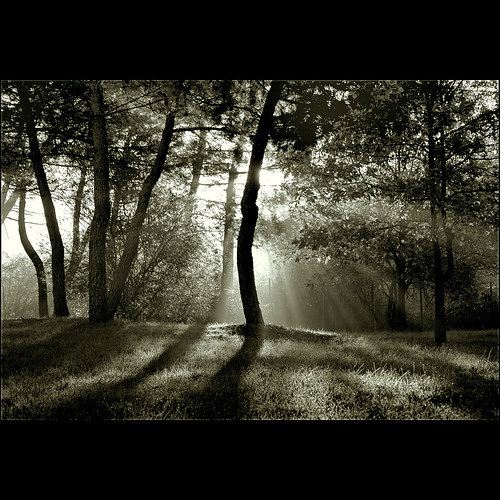
Light and substance—it’s another way to describe chiaroscuro, the painting technique developed in the Renaissance that we worked on last week.  Think about those two words together—light, a perennial quest for painters, exemplified by Monet and the Impressionists, and applauded in art criticism throughout art history—and Substance, what we generally call form, but the concept of substance deliciously implies greater meaning. It’s really a heady combination if you think about it.

I was struck by the work in the last week.  Emphasizing shadows and light seemed to push folks to explore new ideas and new images. Drawing skills jumped.  And the wall yielded images that caused small gasps when people entered the room.  (Especially when they spied Nancy’s painting—ask her about it.)

The term chiaroscuro is also used in the bel canto (beautiful singing) style of music—-“Brilliant sound of the voice combined with a dark timbre”.

I’m inspired by the sound of all of those words—light; substance; brilliant; dark timbre and a description of chiaroscuro that says “it’s the juxtaposition of light and shade which results in a stunning visual effect in a work of art.”

We are going to work on those ‘stunning visual effects’ and give those who missed class an opportunity to develop a work with chiaroscuro. If you have pieces in progress, you’ll have the chance to develop them further and hopefully add another to the portfolio. Be thinking about the idea of light and substance.  Remember to start with a mid-tone wash if starting afresh.

Posted in Uncategorized | Leave a comment

As That is to That

Chiaroscuro in art is “an Italian term which literally means ‘light-dark’. In paintings the description refers to clear tonal contrasts which are often used to suggest the volume and modeling of the subjects depicted.” Wikipedia[1]

Tonal contrasts are about the relationship between light and dark. When images are said to have Chiaroscuro you can expect to see strong contrasts as each area or shape compares with the adjacent area or shape. Van Gogh–“…. there is no better education than painting outdoors; you must always compare things thoroughly with one another, especially in tone. Painting is like algebra; that is to that as that is to that.”  Not that I’m asking you to think about algebra, but rather picture a Rembrandt self-portrait or the Vermeer we were looking at the other day. Leave color out of it– Van Gogh says: “And then I do not know how you will handle your colors, but that matters little.”

Various kinds of light and shadow:

  • cast shadow-this is the kind of shadow that chases you on a summer day
  • form shadow-this is the kind of shadow that doesn’t get any light. Like the dark side of the moon.
  • value-the quality of lightness or darkness of a mark or shape.
  • edges-the boundary between shapes.
  • highlight-the reflection of the light source on an object.
  • light side- the part of an object receiving direct light
  • dark side- the part of an object opposite the light source
  • reflected light-subtle light bouncing back into the shadow
  • core shadow- the darkest part of a shadow sandwiched between the light side and reflected light
  • value gradation– The slow transition from one shade to another.

This week we are going to play with chiaroscuro.  I recommend a fresh sheet of paper—not too big, so you can really play with this idea.  Canvas is ok, but more challenging.  The deck is open if anyone wants to work outside as Van Gogh suggests.  We have drawing board if you want to sketch outdoors then bring it in to paint.

Perfect timing—the HUGE chunks of charcoal are in for those who ordered them.


Posted in Uncategorized | Leave a comment

Making A List, Checking It Twice

Notes on the formal elements of my process that I demonstrated this last week are below.  It could be expanded, to be sure.  But these checkpoints are things you might question when you are struggling with a piece.  While I’m painting they are considered automatically and quickly.  I don’t think about them.  I react first then assess later—very important in keeping the immediacy and the authenticity in the process.

They are not hard and fast rules.  The very act of creating suggests that rules are broken or made anew. And as I’ve always said in our class, the only rule is that there are no rules.  For almost every one of these guidelines you will find an artist who did the opposite and created a masterpiece.  Use as needed. We will practice one or two of them in class this week.  Have unfinished work or “underpaintings” at hand of which you are willing to abandon control.

1. Subject

Choose a subject that is visually interesting to provide the building blocks of good structure. A light source from one direction giving a strong sense of highlight and shadow is one thing that can make for interest. A variety of values amassed on one side balanced by strong a single, strong contrasted shape on the other also makes for a dynamic composition. But don’t forget to fall a little bit in love.  Be aware of what caused you to consider the subject in the first place and choose knowing it might be a long-term relationship.

2. Scale

Scale of subject and the substrate can make its own statement.  Consider a simple form like a teacup (or a pair of pliers, something I’ve done) painted to be the only subject on a 4 ft by 5 ft canvas.  That makes one kind of statement.  Then imagine that same subject reduced in size within a large field, either empty, or filled with pattern, or texture, or other shapes and objects surrounding it. Same palette, same values, same subject–very different statement.  What about a petite substrate?  It all says something. By enlarging or reducing the size of objects within a piece you communicate a level of importance about them.

3. Cropping/Format

Be deliberate about how your image fits into your format.  Be conscious. Don’t choose a horizontal format for a vertical composition unless you’re doing it intentionally.  You might enjoy the challenge be re-formatting on the fly, but don’t get stuck wondering why it isn’t working when you haven’t even noticed that your subject is long and tall and your paper is short and wide.  LOOK at you image.  Crop it with a view finder or your fingers or tape and understand how it fills up and relates to the four sides of your substrate.  If you are working on paper you can crop later too.  I like to challenge myself by trying to make a painting work in the parameters I have in front of me, keeping it more about the process than the product.  But cropping is legit.   A local artist (now diseased) Barbara Bartholomew, used to unroll a large swath of canvas on the floor, paint the whole thing, then crop the most dynamic compositions from the whole and stretch and frame them.  She was very successful.

4.  Placement

The way shapes are placed on a 2-dimensional surface lends levels of importance, meaning, and balance to a work of art. A subject cropped by the edges of the paper or canvas will usually add more visual interest than placing the whole subject within the frame, as will making a single object fill the entire space. (Think O’Keefe) However, “objects that barely touch each other, or barely brush the borders of your artwork causes instability”. (Paraphrased from Dan Duhrkoop, a west coast artist and art writer.)

5. A Good Composition leads the Viewers eye around the page

Lead the viewer’s eyes around the page, to the center and to the outlying areas. And remember-Western eyes read from left to right.  Avoid divisions of halves and quarters.  My natural aesthetic tends to divide the page in quarters, it’s something that I’m always reminding myself to avoid. I’ve made it work, but it makes composing more difficult than it needs to be.

6. Positive and negative space

Equal parts of positive and negative space is thought to add stability and harmony to a composition, but can also add to boredom.  If you’re struggling, see if balancing positive and negative will help, or not. Or perhaps allow every shape you deem positive to come forward or recede dependent on value and temperature?  That’s an abstract approach.

7. Contrast

Contrast is your friend. Without it a work of art is liable to be less interesting. (Paraphrased from Dan Duhrkoop.)  There are exceptions (think Morandi for example). Contrast draws the eye. If you want the viewer’s eye to move around the composition make sure that an area of contrast is not unintentionally drawing the eye back to one spot.  Utilize it to create rhythm, direction, focal point and a dynamic foreground.

8. Color

Color is seductive and causes emotional reaction in people with its very existence.  But to make it speak in a composition can be tricky—too much dilutes impact.  Unbalanced intense colors create unintentional eddies that are hard for the eye to escape. Then, of course there is the ongoing avoidance of “mud puddles”.  But one of its most seductive attributes for me is playing with temperature.  An unexpected cool or warm in a passage can create delicious tension and endless interest.

9. Edit

If your composition is blah—eliminate and repaint. If there is a passage that is unclear or a tangle of lines and shapes that don’t enhance, or if there is “a slab of mud”,  just get rid of it.  Paint out everything you don’t like. Reassess, repaint.

Posted in Uncategorized | Leave a comment

Voyage of Discovery

If you are prone to watching movies that involve soulful, struggling writers who can’t seem to catch a break, you have probably heard them counseled by a wise advisor—“write what you know”.

Oddly, in the last week I’ve heard two writers, Colum McCann, author of Let the Great World Spin, and Garrison Keillor say something slightly different—sure, write what you know, but also write what you don’t know.  Write to Discover. 

McCann talks about teaching writing: “My first lesson is that you can’t write about what you know about. And they’re like, what in the world can I write about? And I say well, you should write towards what you want to know, and maybe even write what you don’t know. And in the process of writing what you don’t know, you will understand these things that are sort of written in your DNA that are deep in your body, but you weren’t able to actually recognize at the time.”

I know I stretch everything to relate to painting and for me this does. Let’s exchange the word–…and in the process of painting what you don’t know , you will understand these things that are sort of written in your DNA….but you weren’t able to actually recognize….”

In scratching blankly for an element to add to a piece in progress, I wait until something catches my eye–some line, shape, subject or color combo never quite used before. Without hesitation it’s employed. I discover that my gut understood something my mind did not.  Observation, focus, patience and risk pay-off.  I’m reminded how that works in the rest of life too.  When it doesn’t pay-off, I’m reminded that there’s more paint and more paper and to not take it so seriously—another lesson.

Yesterday while painting with Nan she made an observation. My time for painting was up but the unfinished piece on the wall had an area that truly bugged. I REALLY like this painting so far. My heart began to race knowing I’m late.  I can’t let it go.  I must do something—darker, lighter, brighter, patterned? A different shape? Several colors made no impact, or worse. I run to my pile of paints and an untried tube from Nice is on the top.  Brown? The label is so pretty, but brown? What the hell! Milk-chocolate-pudding brown goes over the green that was over the blue—wow…look at those colors together…how cool is that? It was so exciting!

Nan said—“If people watched you paint, they would be surprised at how much your process is about discovery.” It is.  That’s the best part. Continuing to pay attention and to follow the flicker of an instinct, not a well-worn path. Watching something new unfold, adding it to my bag of tricks, expanding my ‘signature’, not being afraid. That’s how to develop as a painter, a creator.

This week I’m going to paint in class—a new canvas in each class using the same photo.  I will paint for about an hour (nothing will be finished).  You can watch, or paint, or do both.  In the spirit of discovery I urge you to pick something new to paint or a new tool or medium just to see where it leads.

Posted in Uncategorized | 1 Comment

Independence Day

Not being much of an “understander” of performance art and one who has little patience for what feels like exhibitionism, I was surprised at how affected I was by the HOB documentary about Maria Abromovic—“The Artist is Present”.  I want to capitalize both the ‘I’ and the ‘S’ in ‘IS’ because, for me, putting the answer to “what is art?” in a nutshell begins with the number one requirement– that the artist be present.

The artist being present in the making and being present in the result is what makes a work of art resound.  There are so many levels to that concept.  We see it in areas in which we understand it more readily, especially in physical acts like in athletes, dancers, actors and musicians. We see them perform—use their whole being to act and react. The “sound” is in their deed. We see it in doctors and therapists too where their focus is trained on something/someone outside themselves while connecting to an innermost voice speaking compassion and empathy. And actually, we see it most easily in young children, when we watch their level of engagement as they explore and discover while their parents try to get them to execute some kind of act to please the audience of grandma, etc. Beware of the impulse ‘to please’.  Picasso famously said: “Every child is an artist. The problem is how to remain an artist once we grow up.”

In visual art the idea of image much too easily supersedes the idea of the artist’s presence.  Both are essential. But we are judged by the remnant of the ‘deed’, our action washed away like footprints in the sand. It’s so easy for the decorative powers of image to overtake what makes art resonate. Most often we don’t even know what that is.

Abromovic illustrates the power of presence accompanied by NOTHING else.  Watch her “performance” at MoMA in 2010: http://www.moma.org/interactives/exhibitions/2010/marinaabramovic/  .  She sits (7.5 hours a day, 6 days a week for 3 months) and with all her will and discipline she gives attention to over 750,000 people. I could be nothing but be deeply moved while I watched.

On another level it was interesting to have the analytic brain notice the number of women compared to men; how few people wore make-up; and the myriad of hair styles and hairlines that exist.  There were famous people like Isabella Rossellini, Sharon Stone and I think I saw Alan Rickman who sat across from her.  But they were all just “there”.  No one was “anyone” and everyone was “someone”. Some cried.  The lump in my throat lingered.

While we fool around with elements and principles of art and design because they comfort us as we cling to the tangible.  The lump in the throat is what we strive for in our art-making–to touch someone, even if it is only ourselves.

It’s our high wire act.  It’s our independence and our interdependence. Our voice is singular, our feelings universal.  Happy 4th of July!

Posted in Uncategorized | Leave a comment

Spaced Out

What is a painting?  A question we ask ourselves over and over as we ponder “Is it done?” The answers are many, but the simplest definition involves a collection of marks and shapes made in paint on a 2-dimensional surface.  The logical next descrption would include  formal elements and principles of art which we recently talked about. But it would take volumes to fully explore the theories and contradictions of what painting is (James Elkins tried it in one volume–not enough, but a good read) and still we would not have anything concrete. Art, indeed, remains a mystery. However we continue to try and crack its code.

So continuing with the elements of art, on some lists (of course, not everyone agrees on this either) the element of space is to be considered. What is space in the context of painting?  A Wikipedia answer: Space is the area provided for a particular purpose. Space includes the background, foreground and middle ground. Space refers to the distances or areas around, between or within components of a piece. There are two types of space: positive and negative space. Positive space refers to the space of a shape representing the subject matter. Negative space refers to the space around and between the subject matter. Space is also defined as the distance between identifiable points or planes in a work of art.

This week we are going to explore “significant space”, a term defined by architect and painter, Jeffrey Hildner. He describes: ”Significant Space results when artists treat solids and voids as interdependent abstract elements of the visual field.”

You do this all of the time, even if you are not an abstract painter and are not aware of this spatial manipulation.

Space manipulation, a hallmark of modern art began mostly with Cezanne. He was considered the father of modern art largely for his approach to form and space. But it really goes back to (at least) Manet who used flat space and shallow volumes in his pictures and created form “not through a gradual blending of tones, but with discrete areas of color side by side.” NGA. A direct line can be traced from Manet’s “Olympia” to Diebenkorn’s Ocean Park Series.

Many of you struggle with creating deep space and volume with tone.  Once that is conquered, the battle becomes creating a tension by handling the space in non-traditional and unexpected ways. We are going to play with both of these concepts.  Find a subject to be represented in two ways.  It can either be an object, or several, or a photo.  (consider room). Prepare either a single sheet large enough for two paintings divided or two substrates the same size, approximately 12” x 16”. ( A  full sheet of watercolor paper is 22″ x 30″, so you might want to tape off a similar size.)

Posted in Uncategorized | Leave a comment

A Primer

Image-making, visual communication and understanding, creativity, reflection, self-discovery, expression and more—at some level painting is about is about all of these.  And when it resonates for the viewer or the maker it is felt somewhere in the region of the solar plexus.  Is that the heart?  Could that be the location of the soul, hiding under the ribs beneath the lungs?   Does the brain have a satellite orbiting the liver?  That’s the mystery.  Regardless of how or why we feel the “…distinctive pulse of creative achievement…” (Roger Kimball The Rape of the Masters: How Political Correctness Sabotages Art), we do.

Whether you have felt it or not, the mere fact that this mystery has been acknowledged and written about relentlessly through the ages validates its very existence. It also drives people to seek a formula to conjure its power. The ambiguity is uncomfortable in our post-Renaissance-man-at-the-center-of-the-universe world, especially when we seek to be the maker of this extraordinary thing.  We want the building plans.

An encore listen to a TED Talk by Elizabeth Gilbert reminded me of the origin of the word “genius”. In Ancient Rome a genius was the guiding spirit of a person’s tutelage.  It wasn’t the person. But now that the responsibility of brilliance rests squarely on our shoulders like a plow (most often burrowing in the mud), it’s no wonder we look for aids to walk with us to take some of the weight.

Toward that end we are going to review principles and elements of art that are taught at the most basic level.  The following links are from the education departments of the Getty Center (I hope they work, if not I’ll have a few copies.): http://www.getty.edu/education/teachers/building_lessons/elements_art.pdf

http://www.getty.edu/education/teachers/building_lessons/principles_design.pdf

We’re going to have a brief discussion of these ideas, then you can work on whatever you choose.

Posted in Uncategorized | Leave a comment

Where it stops, nobody knows…

New publications being discussed currently on many talk shows, (mostly on OPB and Comedy Central), are abuzz with dialogue about curiosity, creativity, psychology, science and art. From many different angles experts are exploring how the brain works, what sparks creativity and what it means to discover.

Swimming around in this rich pool of theories and studies, the ideas I’ve held about the value of the painting process and the things that artists, (who express not in words,) have quoted throughout art history are trying to connect in my brain.  Unfortunately, in the fog of old age and youthful indiscretions the synapses aren’t quite firing quickly enough to build the desired bridge of thought. (Mixing metaphors, I know–just think Dickensian London in the dark by the Thames and you’ll get the picture.)

So I’m going to combine stories/concepts from various sources for our exercise this week that will encourage letting-go in order to prod the unconcious into action. In one way or another, the scientist, the artist, the psychologist and even the athlete agree that “…everything that leads you to insight happens unconsciously.” Mark Beeman, Ph.D. Associate Professor Brain, Behavior, and Cognition. The unconscious is not about control or skill it is about releasing expectations. We practice both skill and letting-go in our class, but we practice letting-go more often because it is the thing we cannot see, the thing we do not trust. Painting, if it is to be worthwhile, is not about reproduction but it is about something.  Whatever that something is it involves insight—that which is not yet known.

“Every creative journey begins with a problem…a feeling of frustration, the dull ache of not (sic) knowing the answer…” Jonah Lehrer from his new book, Imagine: How Creativity Works.

Bob Dylan was burnt out.  Sudden fame and the exhaustion of a European tour had him ready to quit the music business.  He made a decision to stop songwriting and, after a break, find a new path.  In solitude in a cabin in Woodstock, where he didn’t even bring his guitar, with absolutely no goal in mind and nothing to lose he began writing in an empty notebook that he now had no obligation to fill. The words flowed.  He suddenly felt as if he had something to say, what Lehrer  calls “the itch of imminent insight.”  Dylan describes it as “vomit”–an uncontrollable outpouring that began with: “Once upon a time you dressed so fine…” The lyrics for the album of Hwy 61 Revisited were delivered. Because he had no goal, no pressure, he was free to follow an unseen and unknown ghost down a path that felt almost silly. Then he realized that it was possible to “celebrate vagueness”…..

Peter Land, a cartoonist, was creatively stumped.  He was brainstorming with his friend Kevin Eastman back in 1984, begging for ideas.  Eastman saw a turtle figure on the desk and told Land to draw a turtle. Eastman then added the disparate concept of Ninja. (It was in the early eighties that the Ninja movie reached its peak.)  Further play had them both adding nunchucks, blindfolds, etc.  They amused themselves so much they began to think they might amuse others too.  With a modest tax refund they printed 3,000 copies of a comic strip based on four turtle characters dressed like Ninjas named after famous artists adding “Teenage Mutant” to the title.   You know the rest.

“Let’s get the data, then determine the hypothesis” is what neuroscientist Stuart Firestein believes is the path of greater discovery. Instead of the scientific method we learned in school, he believes when you are invested in a hypothesis, findings from experiments are read with a bias in order to prove that hypothesis instead of being open to the undiscovered. So skip the hypothesis. Likewise, when you set out to reproduce an image rather than letting that image simply inform a new image, the likelihood of creating something original and authentic diminishes. You spend so much time trying to get it “right” that you don’t see how getting it wrong can be much more interesting, evocative and resonant. Mr. Firestein teaches a course called Ignorance at Columbia University. Ahhh, a certain respect for ignorance—(smart ignorance).

We are going to use combination of uninvested, conceptual blending. And we’re going to revel in not knowing the end.  Fresh substrate, please.  I have no idea how this will work out…..

Posted in Uncategorized | Leave a comment

What’s It All About? (a-gain)

Anyone who really wants to paint usually has something to say worth saying using this visual language. Our task is to figure out the tangle of possibility that leads to speaking the truth. At some level it concerns the rudimentary— how to make a cylinder look rounded or how to mix purple.  These skills, however, do not necessarily reveal truth.  They often prop up the humdrum, the unoriginal, the “who cares?” As Matisse said: “Exactitude is not truth.”

Yet without them where do we begin?  How do we jump in the pool of creativity without knowing the strokes? How do we reach toward the discovery of one’s own veracity?  These are the questions we seek to answer.  There are no lessons for that. The best we can do is to create an environment that makes the journey as relaxed and revealing as possible. We work to clear the brambles and the cobwebs so the mark we make can be trusted.  We connect to the larger subject, be that an object or an idea or both. We balance the skill we have and those we learn with authenticity.  We struggle to keep the “cart before the horse” as we careen down the path learning basics while we keep the greater goal of vision.

It is universally agreed that authenticity is what makes a work of art speak. It’s what makes a painting stop a viewer and causes a stir in the solar plexus.  Why aspire to anything less? As everyone’s truth is different, discovering one’s own is what the journey is about.  “Truth is so excellent that if it praises but small things, they become noble.” Leonardo da Vinci.

So as we struggle to make the leg bone look connected to ankle bone, etc., the important thing to strive for is keeping the artist (you) connected to the bigger vision. As I have repeated many times before and will repeat again, remember the Martha Graham quote: “There is a vitality, a life-force, an energy, a quickening that is translated through you into action, and because there is only one of you in all of time this expression is unique. And if you block it, it will never exist through any other medium and be lost. The world will not have it! It is not your business to determine how good it is nor how it compares with other expressions. It is your business to keep it yours clearly and directly, to keep the channel open.”

So as you approach your subject this week, open the door for the critic, the judge the ego and firmly kick them out of the way and connect directly, clearly and completely. That’s the focus this week (and all weeks).

Posted in Uncategorized | 1 Comment